
Sculptra vs. Dermal Fillers: Which Volume Restoration Treatment Is Right for You?
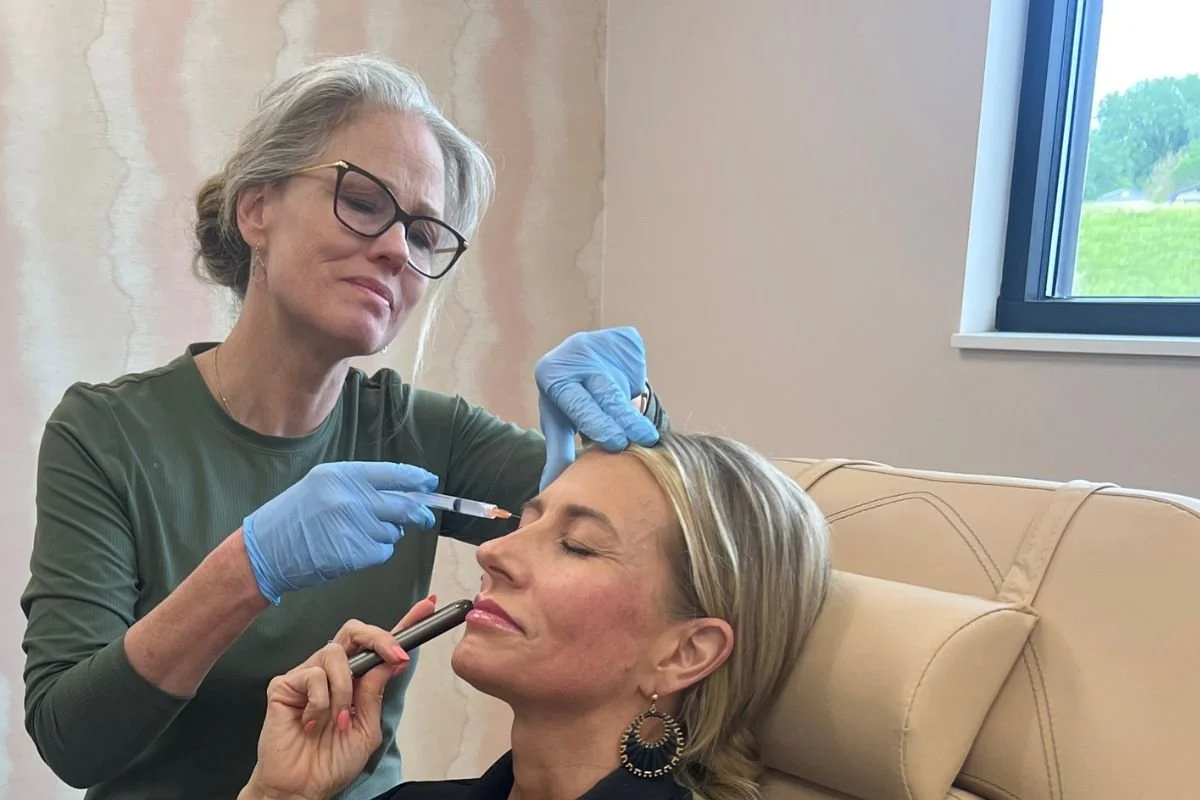
Transformative Aesthetics. Building Confidence from the Inside Out.
You’ve noticed the changes gradually. The fullness in your cheeks that used to give your face a youthful, rounded shape has started to flatten. Your jawline isn’t as defined as it once was. The area around your temples looks a little hollow. Maybe you’ve lost volume around your mouth, creating deeper lines that weren’t there a few years ago. You don’t look tired because you are tired — you look tired because your face is losing the structural volume that once gave it that rested, vibrant appearance.
Facial volume loss is one of the most significant — and least understood — contributors to visible aging. While most people associate aging with wrinkles, it’s actually the loss of volume beneath the skin that drives the most dramatic changes in how we look. And the good news is that volume restoration is one of the most effective, most natural-looking treatment categories in aesthetic medicine today.
But here’s where it gets confusing: there are multiple approaches to restoring volume, and they work in fundamentally different ways. Dermal fillers and Sculptra are both injectable treatments, but they achieve volume restoration through completely different mechanisms — and understanding the difference is essential for making the right choice for your goals.
At The Skin Clinic in Mankato, we offer both options because we believe in matching the right treatment to the right person. This guide breaks down everything you need to know to make an informed decision — or to have a more productive consultation with your provider.
Understanding Facial Volume Loss: Why It Happens
Before diving into treatment options, it helps to understand what’s actually happening beneath the surface when your face starts to change shape.
Starting in your mid-twenties, your body begins producing less collagen — roughly one percent less each year. Collagen is the protein that provides structural support to your skin, keeping it firm and resilient. As collagen production declines, the scaffolding that holds your skin in place weakens.
Simultaneously, the fat pads that give your face its youthful contours begin to shrink and shift downward. The cheek fat pads that once sat high on the cheekbones descend, creating hollowness in the mid-face and contributing to deeper nasolabial folds. The temples may hollow. The jawline can lose its definition as the underlying structure changes.
Bone resorption also plays a role — the facial skeleton gradually loses density over time, particularly around the jaw, chin, and eye sockets. This creates less surface area for the skin and soft tissue to drape over, contributing to sagging and a less defined facial structure.
The result of all three processes combined — collagen loss, fat redistribution, and bone resorption — is the change you see in the mirror. It’s not just wrinkles. It’s a fundamental shift in your facial architecture. And it’s why volume restoration, rather than just wrinkle treatment, is often the most impactful approach to facial rejuvenation.
For many women in their forties, fifties, and sixties, this shift is what prompts the realization that skincare products alone can’t address the changes they’re seeing. No cream can rebuild lost collagen structure. No serum can replace the fat pads that have migrated downward. Volume restoration works because it addresses the actual cause of the change — not just the symptoms on the surface.
Dermal Fillers: Immediate Volume, Targeted Results
Dermal fillers are the most well-known approach to volume restoration, and for good reason. They’re versatile, effective, and deliver immediate, visible results.
How They Work
Most dermal fillers used today are made from hyaluronic acid (HA) — a substance that occurs naturally in your skin and is responsible for maintaining hydration and plumpness. When injected, HA fillers physically add volume to the targeted area immediately. They fill space, restore contour, smooth lines, and enhance structure — all in a single appointment.
Different filler products are formulated with varying densities and consistencies, making them ideal for different purposes. Thinner formulations work beautifully for lips and delicate areas like under the eyes. Thicker, more structured formulations provide lift and projection for the cheeks, jawline, and chin.
What They’re Best For
Dermal fillers excel at targeted, precise volume restoration. They’re the go-to choice for lip enhancement, cheek contouring, smoothing nasolabial folds (the lines running from your nose to the corners of your mouth), under-eye hollowing, jawline definition, and chin enhancement. When you need volume in a specific area and want to see the results immediately, fillers deliver.
Timeline and Longevity
One of the biggest advantages of dermal fillers is that you see results immediately. You walk into your appointment and walk out looking refreshed. There may be some initial swelling that settles over a few days to a week, at which point you’ll see your final result.
How long fillers last depends on the product and the area treated. Most HA fillers last anywhere from six months to eighteen months, depending on factors like the specific product used, the treatment area, your metabolism, and your lifestyle. Areas with more movement (like the lips) tend to metabolize filler more quickly than more static areas like the cheeks.
A Unique Advantage: Reversibility
One feature that’s unique to HA fillers is that they’re reversible. An enzyme called hyaluronidase can dissolve HA filler if needed. This provides an added layer of safety and flexibility that’s particularly reassuring for clients who are new to injectable treatments.
Sculptra: Rebuilding Volume from the Inside Out
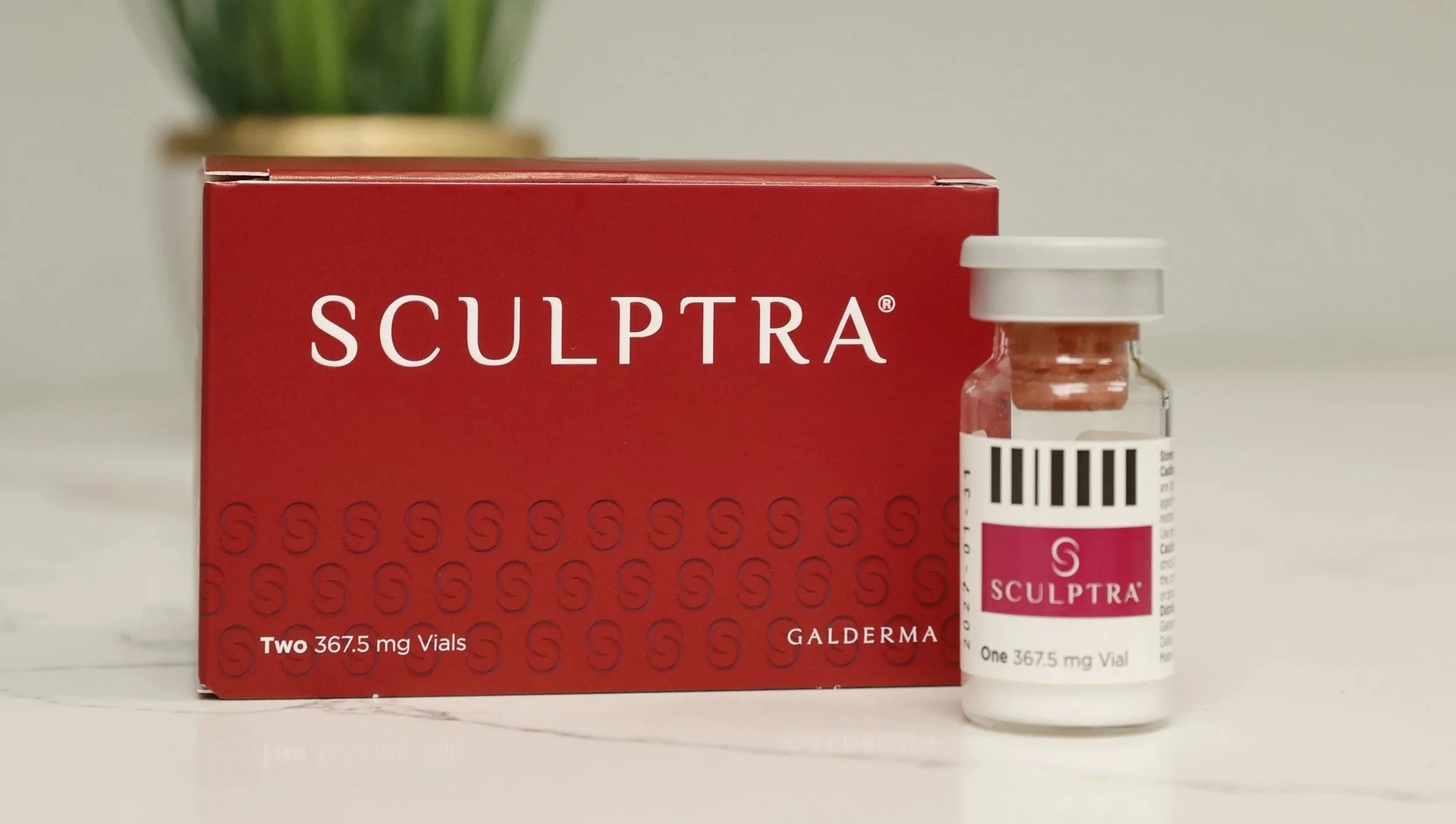
Sculptra takes a fundamentally different approach to volume restoration. Instead of adding volume directly, it stimulates your body’s own collagen production — essentially rebuilding your skin’s internal structure from within.
How It Works
Sculptra is made from poly-L-lactic acid (PLLA), a biocompatible synthetic substance that has been safely used in medical applications for decades. When injected, Sculptra triggers a controlled response that stimulates your fibroblasts — the cells responsible for collagen production — to build new collagen in the treated area. The PLLA particles are gradually absorbed by the body, but the collagen they stimulated remains.
This means Sculptra’s results develop gradually over weeks and months as your body produces new structural collagen. You won’t see an immediate transformation like you would with fillers. Instead, you’ll notice a progressive improvement — your skin becoming firmer, your contours more defined, your face gradually regaining the volume and structure that time took away.
Many of our clients describe this as the most natural-looking approach to facial rejuvenation they’ve experienced. Because the volume is coming from your own collagen — not an external substance — the results look and feel completely natural. People notice that you look great, but they can’t pinpoint why. That’s the Sculptra effect.
What It’s Best For
Sculptra is ideal for broader, more diffuse volume restoration. It’s particularly effective for rebuilding volume across larger areas of the face — the cheeks, temples, jawline, and overall facial contouring. Because it works by stimulating collagen rather than filling space, Sculptra is excellent for clients who want a subtle, gradual improvement that doesn’t look like they “got work done.”
Sculptra is also a strong choice for overall facial rejuvenation when the goal is to address widespread volume loss rather than one specific area. It improves not just volume but skin quality — texture, firmness, and elasticity — because the underlying mechanism is collagen production.
Timeline and Longevity
Sculptra requires patience, but it rewards that patience with exceptional longevity. Most clients need two to three treatment sessions, spaced about four to six weeks apart. Results begin to emerge around four to six weeks after the first treatment as collagen production ramps up, with full results developing over the following months.
The payoff? Sculptra results can last two years or more. That’s significantly longer than most HA fillers, and because the results come from your body’s own collagen, they fade naturally and gradually — there’s no sudden “wearing off.”
Sculptra vs. Fillers: A Side-by-Side Comparison
Understanding the key differences makes it easier to determine which approach aligns with your goals.
How They Add Volume
Dermal fillers: Physically add volume by filling space beneath the skin with hyaluronic acid gel. The volume comes from the product itself.
Sculptra: Stimulates your body to produce its own collagen, which gradually rebuilds volume from within. The volume comes from your own tissue.
When You See Results
Dermal fillers: Immediate results. You’ll see the improvement as soon as you leave your appointment, with final results settling within one to two weeks.
Sculptra: Gradual results over weeks to months. Improvement develops progressively as collagen production increases. Most clients see the full effect within two to three months after completing their treatment series.
How Long They Last
Dermal fillers: Typically six to eighteen months, depending on the product and treatment area.
Sculptra: Two years or more, with results fading naturally and gradually.
Number of Treatments
Dermal fillers: Often a single treatment session, with touch-ups as needed over time.
Sculptra: Typically two to three sessions spaced four to six weeks apart for optimal results.
Best For
Dermal fillers: Targeted, precise volume restoration — lips, specific facial contours, under-eye hollowing, nasolabial folds. Ideal when you want immediate results for a specific concern.
Sculptra: Broader facial volume restoration, overall rejuvenation, and clients who prefer gradual, natural-looking results. Ideal for widespread volume loss across the temples, cheeks, and jawline.
Who Is the Ideal Candidate for Each Treatment?
Your lifestyle, your timeline, and your aesthetic philosophy all play a role in determining which approach is right for you.
You might lean toward dermal fillers if: you want to see results immediately, you have a specific area of concern (like lips, under-eyes, or nasolabial folds), you have an event coming up and want a quick refresh, or you’re new to injectables and want to start with something reversible. Fillers are also excellent for maintenance — clients who come in once or twice a year to keep their results looking fresh.
You might lean toward Sculptra if: you prefer a gradual, subtle transformation that doesn’t announce itself, you’re dealing with widespread volume loss across multiple areas of your face, you value longevity and want results that last two-plus years, or you like the idea of your body building its own collagen rather than relying on an external product. Sculptra clients tend to appreciate the “no one can tell” quality of the results.
You might benefit from both if: you want comprehensive facial rejuvenation that addresses both broad volume loss and targeted contouring. Many of our clients start with Sculptra to rebuild the structural foundation and then add fillers for precision enhancement in specific areas. This combination approach delivers the most complete, balanced, and natural-looking results.
The Best of Both: Combining Treatments
Here’s what experienced injectors know: you don’t always have to choose one or the other. In many cases, the most natural, comprehensive results come from combining Sculptra and dermal fillers strategically.
Think of it this way: Sculptra rebuilds the foundation — the broad structural volume that gives your face its overall shape and fullness. Dermal fillers then provide the precise finishing touches — defined cheekbones, a sculpted jawline, smooth nasolabial folds, or enhanced lips.
At The Skin Clinic, this is where our treatment planning approach sets us apart. We don’t sell isolated products — we design comprehensive treatment plans based on your unique facial anatomy, your aesthetic goals, and the results you want to achieve. For some clients, Sculptra alone is the right answer. For others, fillers are all they need. And for many, a thoughtful combination of both delivers the most balanced, natural-looking rejuvenation.
This comprehensive approach — evaluating your facial structure as a whole rather than focusing on isolated areas — is a core part of our results-focused philosophy. We look at the complete picture, because that’s how you get results that look like the best version of you, not a different person.
Volume restoration can also be paired with other treatments at The Skin Clinic for even more comprehensive rejuvenation. Wrinkle relaxers address expression lines while fillers or Sculptra restore structural volume. Skin resurfacing treatments improve texture and tone. When these approaches work together as part of a coordinated plan, the results are far more impactful than any single treatment alone. This is the difference between selling isolated services and designing personalized treatment plans — and it’s at the heart of how we practice at The Skin Clinic.
Common Questions
“Will I look overdone?”
This is the most common concern we hear, and it’s completely valid. The “overfilled” look happens when too much product is used or when it’s placed without attention to facial balance and proportion. At The Skin Clinic, our injectors take an artistic, conservative approach. We believe in enhancing your natural features, not changing them. The goal is always to look refreshed, not “done.” Sculptra’s gradual approach is particularly well-suited for clients who value subtlety.
“How do I decide between the two?”
The honest answer: you don’t have to decide on your own. That’s what your consultation is for. Our team evaluates your facial structure, discusses your goals and timeline, and recommends the approach that will deliver the best results for your specific situation. Sometimes the answer is clear from the start. Other times, we’ll present options so you can make an informed decision with expert guidance.
“Does it hurt?”
For both treatments, we apply topical numbing cream before the procedure to ensure your comfort. Most clients describe the sensation as mild pressure or a slight pinch. Many modern filler products also contain lidocaine (a local anesthetic) within the gel itself, providing additional comfort during injection. Our team is attentive throughout the treatment and will adjust as needed to keep you comfortable.
“What’s the recovery like?”
Both treatments involve minimal downtime. You may experience some swelling, mild bruising, or tenderness at the injection sites for a few days. Most clients return to their normal activities the same day. With Sculptra, your provider will ask you to massage the treated areas for several days following treatment to ensure even distribution of the product.
“At what age should I start thinking about volume restoration?”
Volume loss begins in the mid-twenties and becomes more noticeable in the late thirties and forties. There’s no “right” age to start — it depends on your genetics, your lifestyle, and when the changes start affecting how you feel about your appearance. Some clients come in for early prevention. Others begin when they notice significant changes. Both approaches are valid, and we’ll meet you wherever you are.
Why The Skin Clinic for Volume Restoration
Injectable treatments are only as good as the injector behind them. The same product in different hands can produce dramatically different results. At The Skin Clinic in Mankato, our team combines advanced injection technique with an understanding of facial anatomy and an artistic eye for balance and proportion.
We take time during every consultation to assess your facial structure holistically. We don’t just look at the one area you’re concerned about — we evaluate how your entire face works together. This comprehensive assessment ensures that your treatment plan delivers results that are balanced, natural, and harmonious.
Our team also understands that volume loss doesn’t happen in isolation. For many of our clients, it’s connected to broader changes in skin quality, hormonal shifts, and overall wellness. Because The Skin Clinic offers both advanced aesthetic treatments and comprehensive wellness services, we can address the full picture — not just the surface-level concern.
For women across Southern Minnesota — in Mankato, St. Peter, New Ulm, Belle Plaine, Albert Lea, Fairmont, and beyond — expert injectable care is right here in your community. You don’t need to travel to the Twin Cities for experienced, skilled injectors who deliver natural-looking results.
Your Volume Restoration Journey Starts with a Conversation
Whether you’re drawn to the immediate results of dermal fillers, the gradual collagen-building power of Sculptra, or a combination of both, the first step is the same: an honest conversation with an expert who can evaluate your needs and guide you toward the best approach.
Volume restoration is one of the most effective ways to look refreshed and feel more confident in your appearance. When it’s done well — with the right products, the right technique, and the right treatment plan — the results speak for themselves. You look like you. Just more rested, more vibrant, and more like the version of yourself you see in your mind’s eye.
If you’re a member of The Skin Clinic’s Insider Program, your monthly membership funds can be applied toward Sculptra or filler treatments, making it easier to invest in your aesthetic goals consistently. And VIP members receive exclusive savings on fillers and Sculptra — because we believe ongoing care should be accessible and rewarding.
Ready to explore your options? Schedule your consultation at The Skin Clinic in Mankato, or take our personalized Treatment Planning Tool to start exploring from home.
Restore your contours. Rebuild your confidence. Your transformation starts here.
