
Hair Restoration & Hair Loss Treatment in Mankato, MN
Your Hair Is Thinning. Let’s Find Out Why.
A Plan for Your Hair
More hair in the shower drain. A wider part. A smaller ponytail. A hairline that’s slowly moving back. Thinning hair rarely has just one cause, which is why our hair restoration plans start with you, not a device.
Your consultation at The Skin Clinic looks at your scalp and hair-loss pattern alongside the bigger picture: hormones, thyroid, nutrition, stress and medications. Then we build a plan that fits what’s actually going on, using treatments like Alma TED needle-free scalp therapy and scalp microneedling, plus support from the inside out when you need it.

HAIR RESTORATION AT A GLANCE
best for
Thinning Hair
Excessive Shedding
Receding Hairline
Widening Part
Hormonal Hair Changes
Male & Female Pattern Hair Loss
Decreased Hair Density
approach
NP-Led Hair, Scalp & Whole-Body Evaluation
session time
About 20–30 Minutes
DOWNTIME
None With Alma TED
RESULTS
Gradual—We Compare Photos at 3 & 6 Months
Because you want to feel confident about your hair again.
The problem you’re facing
Hair loss affects far more than appearance — it can impact your confidence, identity, and how you show up in the world.
Whether it’s male or female pattern baldness, postpartum shedding, stress-related thinning, or age-related changes, watching your hair thin can feel discouraging. Many people find themselves avoiding photos, changing hairstyles to hide loss, or feeling less comfortable in social and professional settings.
HOW WE APPROACH IT
We start by looking beyond the visible thinning.
Your consultation may include an evaluation of your hair-loss pattern, scalp health, health history, medications, nutrition, hormones, lifestyle, and other factors that may be affecting healthy hair growth.
From there, we develop a treatment plan specifically for you.
WHY A COMPREHENSIVE APPROACH MATTERS
Hair follicles are influenced by multiple factors.
They respond to what’s happening on your scalp and inside your body. Treating only one side is why so many people try product after product without seeing a change.
WHO IT'S FOR
Our hair restoration treatments may be appropriate for men and women experiencing:
Increased hair shedding
Widening of the part
Decreased hair density
Receding hairline
Crown thinning
Diffuse thinning
Hormonal hair changes
Early to moderate hair loss
Changes in hair associated with aging
The earlier you notice changes, the sooner we can evaluate what's happening and discuss your options.
Supporting Healthy Hair From Within
Sometimes what's happening on your scalp is only part of the story.
Depending on your symptoms and health history, we may recommend further evaluation of factors that can influence healthy hair growth, including:
Hormonal Health
Changes in estrogen, testosterone, thyroid hormones, and other hormonal factors can affect the hair-growth cycle.
Iron & Nutritional Status
Adequate iron, protein, vitamins, minerals, and overall nutrition are important for healthy hair.
Stress & Lifestyle
Significant physical or emotional stress can affect normal hair cycling and contribute to increased shedding.
Overall Wellness
Your hair is part of your body. Looking at the bigger picture can help us identify factors that may otherwise be missed.
This is what makes our approach different: we don't just ask what we can put on your scalp. We ask why your hair may be changing in the first place.
What Causes Hair Loss & Thinning Hair?
Hair loss isn't one condition with one solution.
Understanding the pattern and potential contributing factors helps us determine which treatment approach may be appropriate for you.
Female Hair Loss
Hair thinning in women can show up as a widening part, decreased density, increased shedding, a smaller ponytail or more visible scalp.
Potential contributors may include hormonal changes, genetics, nutritional deficiencies, thyroid changes, stress, illness, medications and aging.
Hormonal Hair Loss
Hormonal shifts can influence the normal hair-growth cycle.
Women may notice changes during perimenopause, menopause, postpartum periods or other times of significant hormonal fluctuation.
Rather than looking only at the scalp, we consider whether hormonal health may be part of the bigger picture when clinically appropriate.
Male Pattern Hair Loss
Male pattern hair loss commonly appears as a receding hairline, thinning through the crown or progressive loss of density.
Early evaluation can be especially valuable because treatment is generally focused on supporting and preserving existing follicles while encouraging healthier-looking growth where possible.
Stress-Related Hair Shedding
Significant physical or emotional stress can disrupt the normal hair-growth cycle and lead to increased shedding.
Illness, surgery, major life stress, rapid weight loss and other physiological stressors may contribute.
Nutritional Factors
Healthy hair follicles require adequate nutritional support.
Depending on your history and symptoms, factors such as iron status, vitamin D, protein intake and overall nutrition may be considered as part of your evaluation.
Thyroid-Related Hair Changes
Changes in thyroid function may be associated with increased shedding or changes in hair texture and density.
When appropriate, thyroid health may be considered as part of your overall hair-loss evaluation.
Age-Related Hair Changes
Just like our skin, our hair changes with age.
Hair may become finer, grow more slowly or lose density over time. Our goal is to support the scalp and follicles while developing a long-term strategy for maintaining healthier-looking hair.
Hair Restoration From the Inside Out
Medical Assessment With Personal Attention
The Skin Clinic was founded by Heidi Hermel, CNP. Your visit is with a provider who listens, reviews your full history and explains what she sees in plain language.
Testing When It Guides Your Plan
When your history points to it, we order labs such as a full thyroid panel, iron studies, vitamin D and hormones. Testing and supplements are chosen for a reason, never as a one-size-fits-all bundle.
Related Health Concerns
If your symptoms point to a hormone imbalance, we may also talk about women’s hormone care or men’s hormone care as a separate part of your plan.
A Plan You Understand
You’ll leave knowing your options, your timeline and your investment. If your type of hair loss needs a dermatologist first, we’ll tell you that too.
Hair Restoration Treatments in Mankato, MN
-
The Skin Clinic Signature Hair Restoration Program
Your Hair. Your History. Your Plan.
Our Signature Hair Restoration Program brings everything together: in-office scalp treatments, at-home care and scheduled progress checks with consistent photos. It’s built after your consultation, so every piece of it has a purpose.
Before you enroll, we walk you through exactly what’s included, the timeline and the full investment.
-
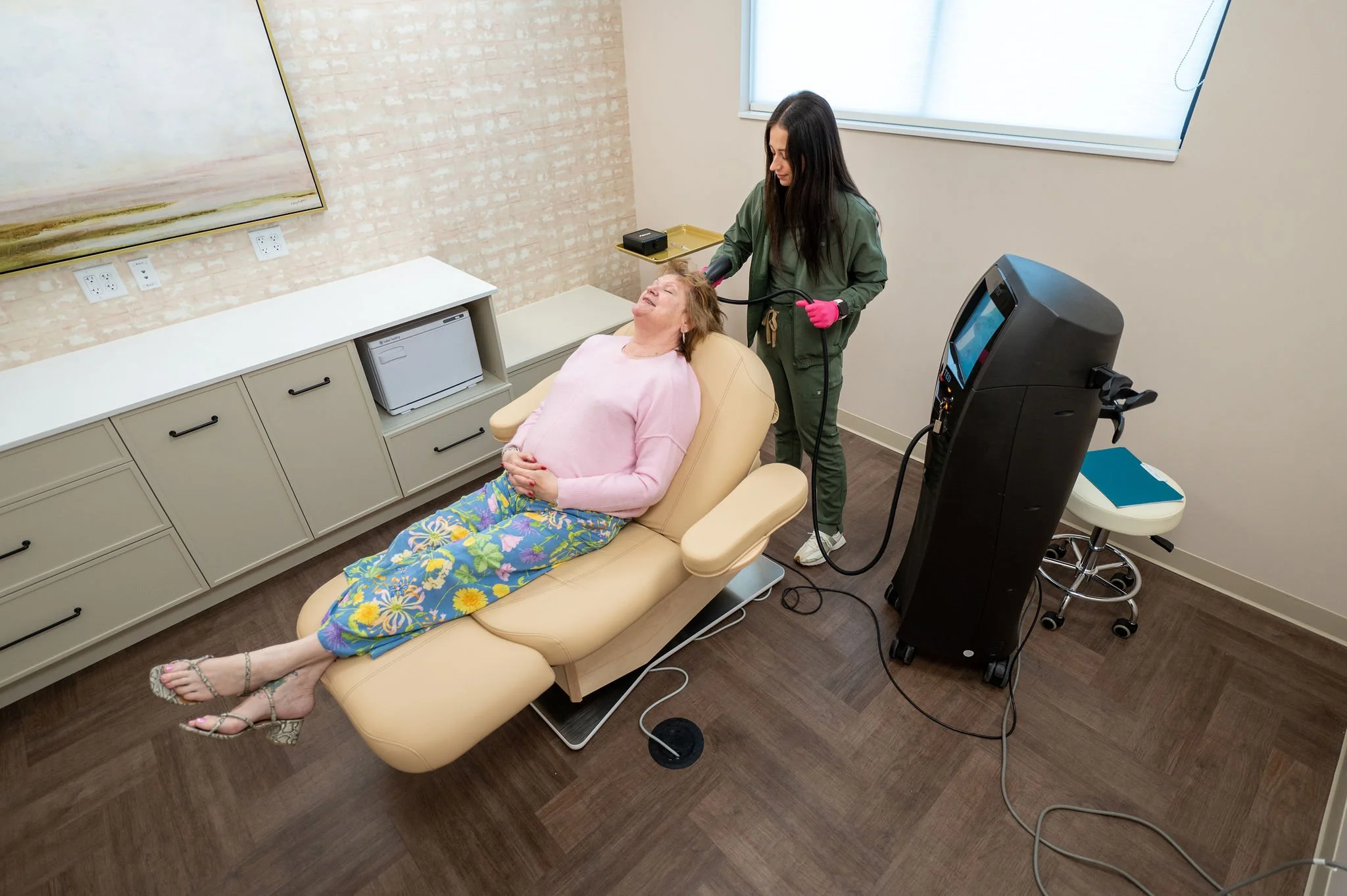
Alma TED Hair Restoration
Alma TED: Needle-Free Hair Restoration
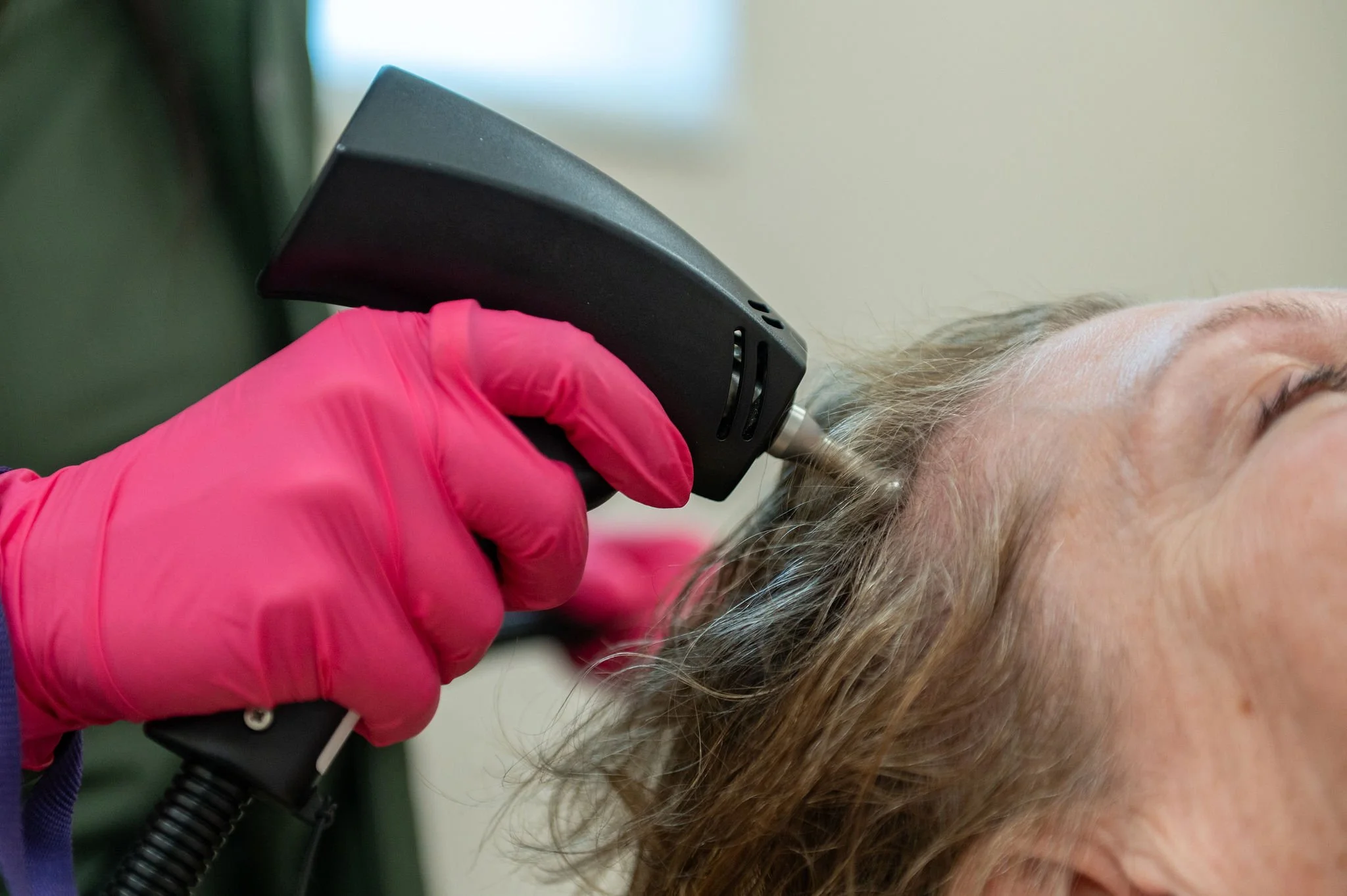
Alma TED (TransEpidermal Delivery) uses ultrasound and gentle air pressure to carry a hair-care formula of peptides, growth factors and amino acids into the scalp, right where your follicles live. No needles, no injections and no downtime.
Sessions take about 20 to 30 minutes. Most clients feel only light warmth or tingling and go right back to their day. A typical series is 3 to 4 sessions about a month apart, with maintenance every 3 to 6 months.
Alma TED is FDA-cleared for androgenetic alopecia, the most common form of hair loss in both men and women.
-
Scalp Microneedling
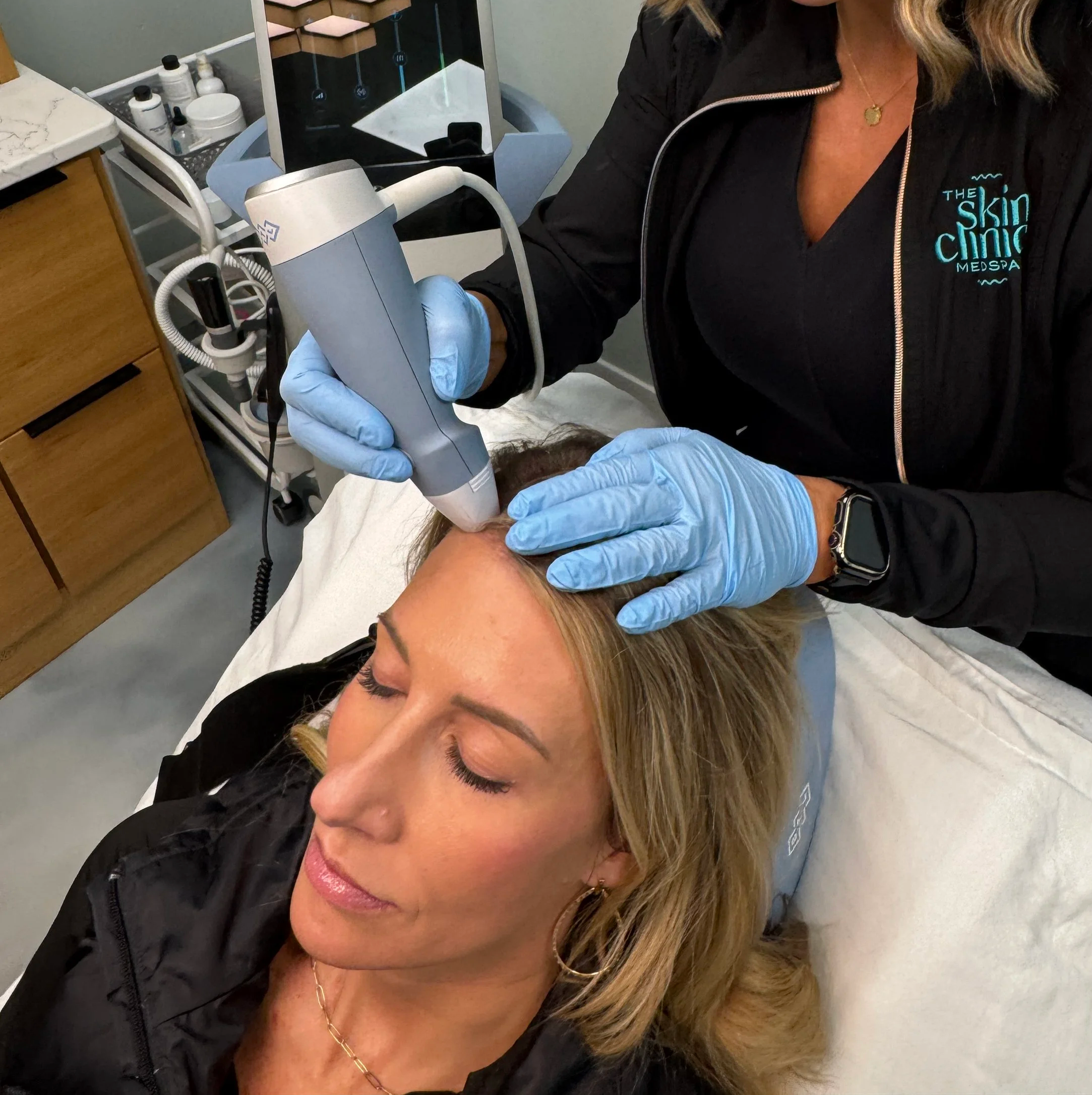
Scalp Microneedling With EXION
For some clients, we add scalp microneedling with the EXION fractional applicator, with the radiofrequency turned off. Tiny, controlled micro-channels wake up the scalp’s natural repair response, boost circulation around the follicles and help the topical applied right after absorb more deeply.
Expect some scalp redness and tenderness for a day or so. A typical series is 4 to 6 sessions about 4 weeks apart, and it pairs well with Alma TED.

Tried Supplements, Serums or Hair Treatments Without Results?
You’re not alone, and it’s not wasted effort. Bring a list of what you’ve tried and a few photos of how your hair has changed. Your history helps us find what was missing.
If your hair loss is sudden, patchy, painful or comes with an inflamed scalp, please let us know when you book. Some conditions need a medical diagnosis before cosmetic scalp treatments.
HAIR LOSS TREATMENTS
○
THE SKIN CLINIC
○
HAIR LOSS TREATMENTS ○ THE SKIN CLINIC ○
STEP ONE
Consultation
We begin by talking about what's changed and what you've noticed.
Your consultation includes:
Hair and scalp evaluation
Review of your hair-loss pattern
Discussion of when your hair changes began
Relevant health and lifestyle history
Discussion of previous treatments
Evaluation of potential contributing factors
Personalized recommendations
Most importantly, we'll talk about realistic expectations and whether you're a good candidate for treatment.
STEP two
Your Personalized Plan
Your plan may include Alma TED, scalp microneedling, at-home care, lab work or a combination. We’ll explain why each piece is recommended, how many visits to expect and the total investment before you begin.
STEP three
Results & Follow Up
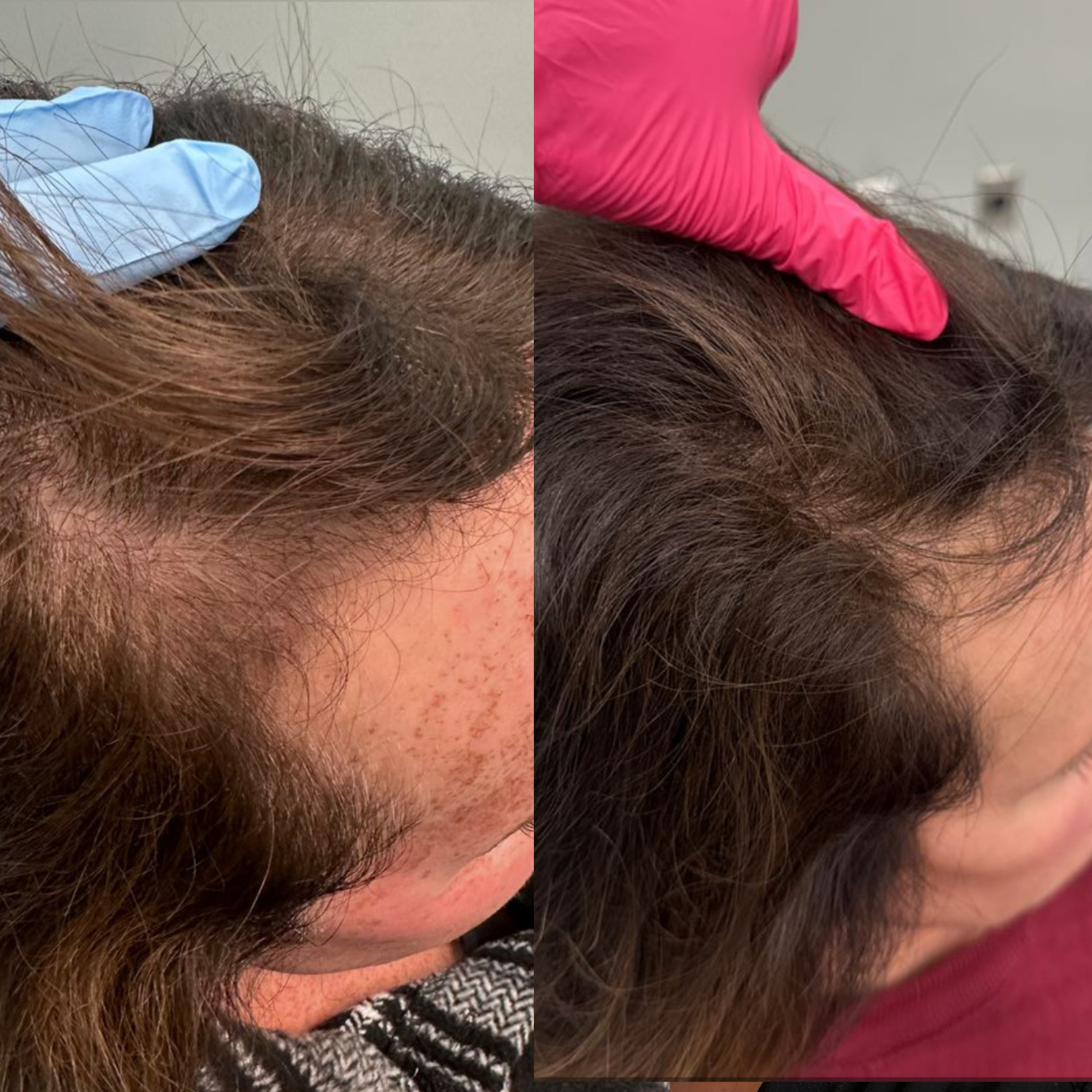
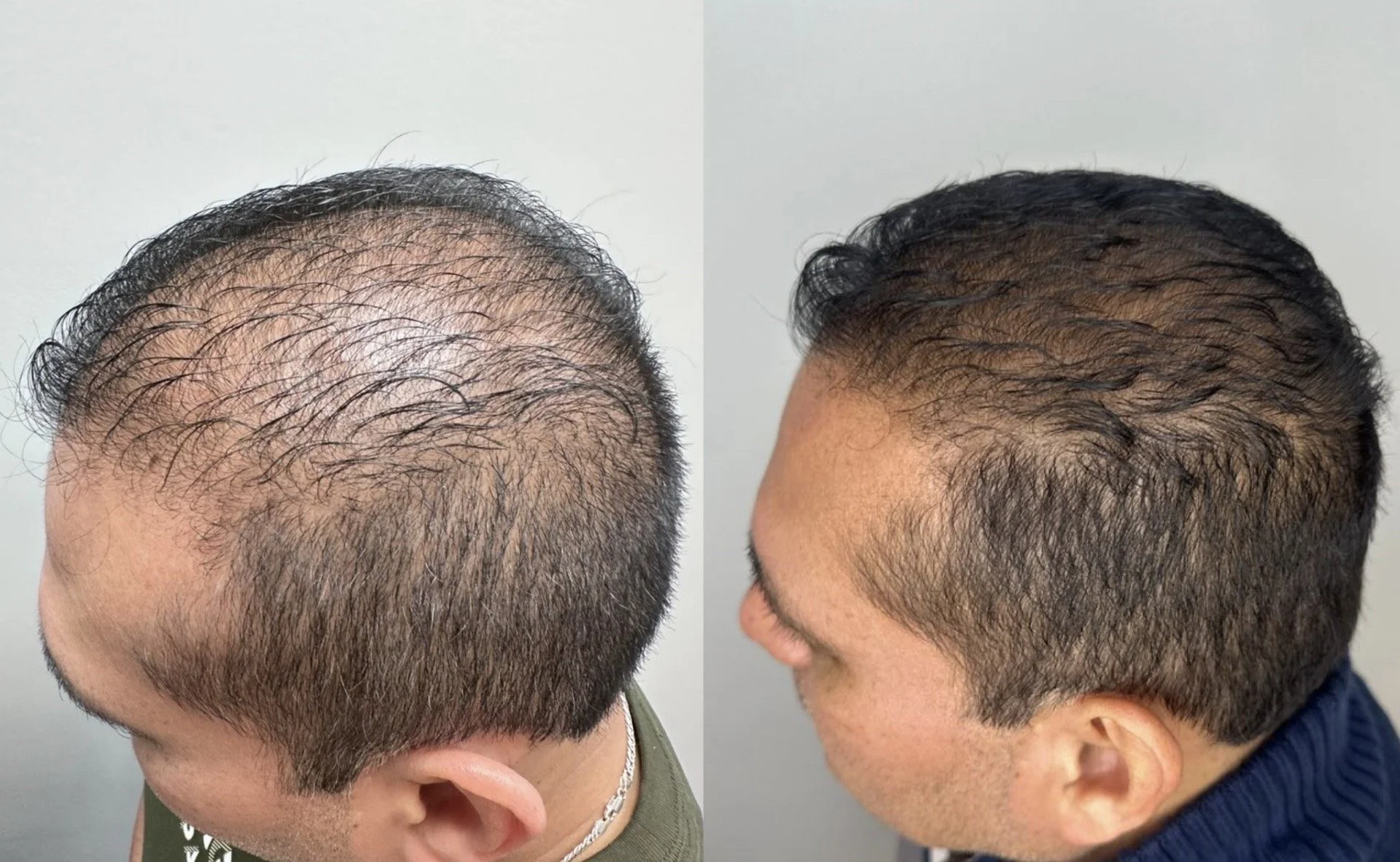
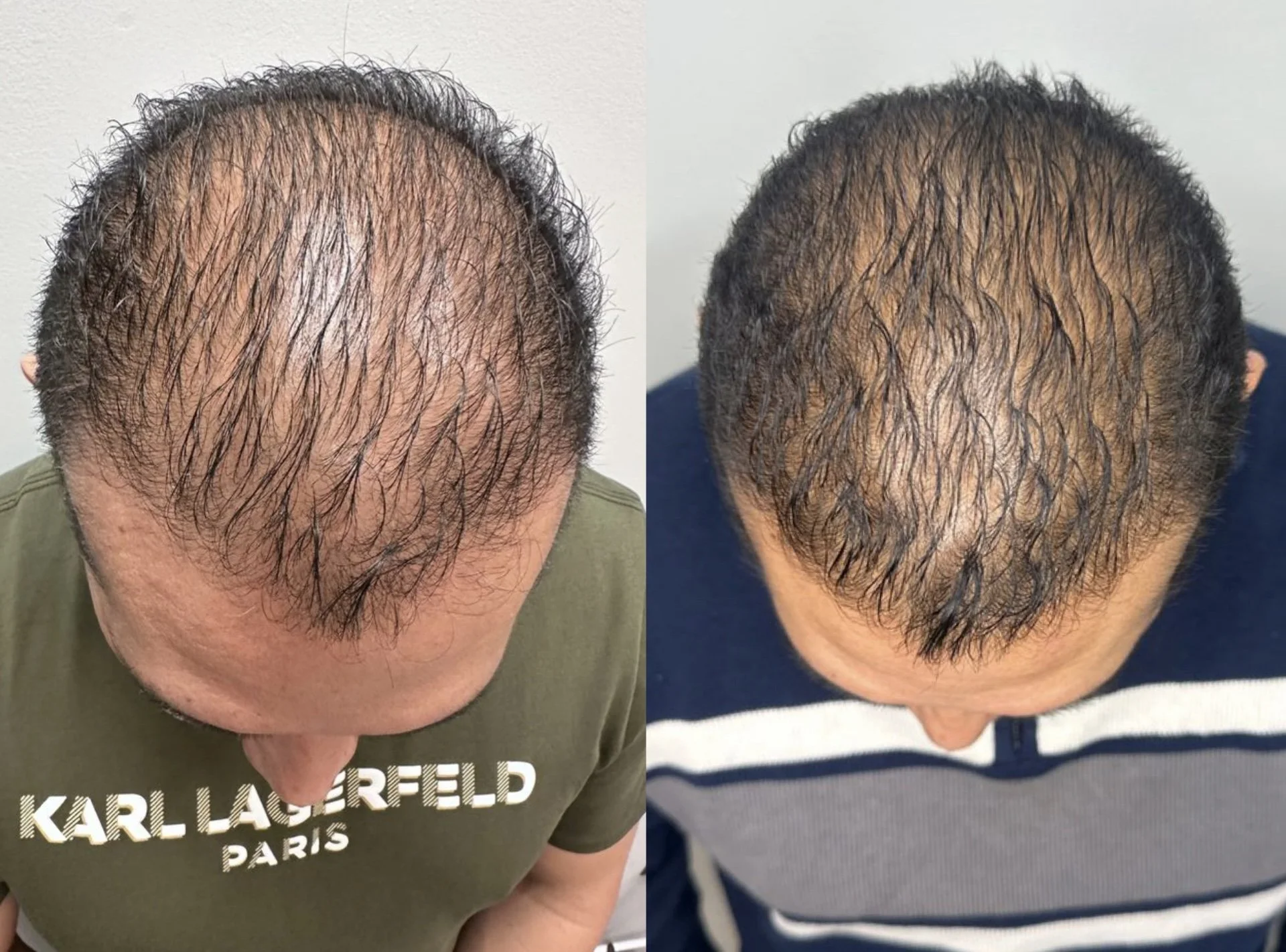
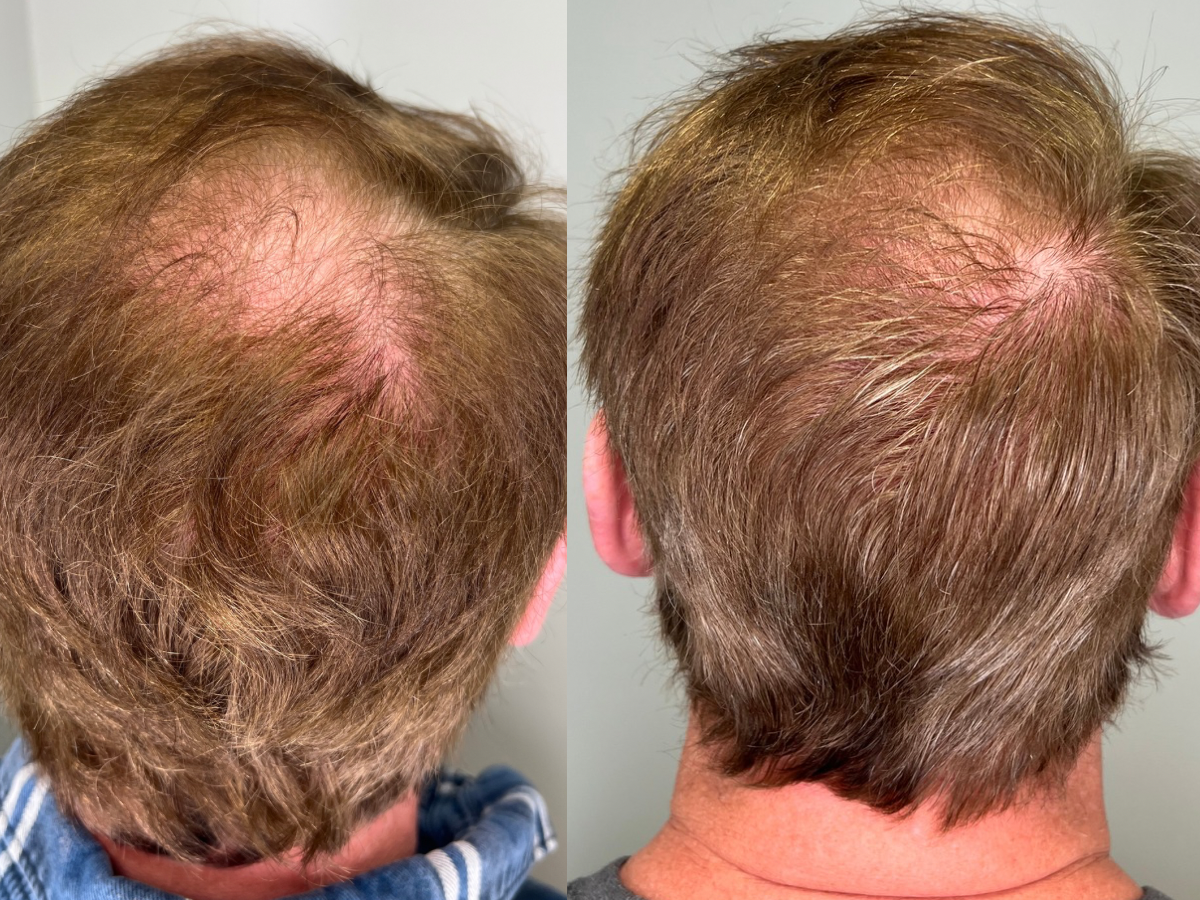
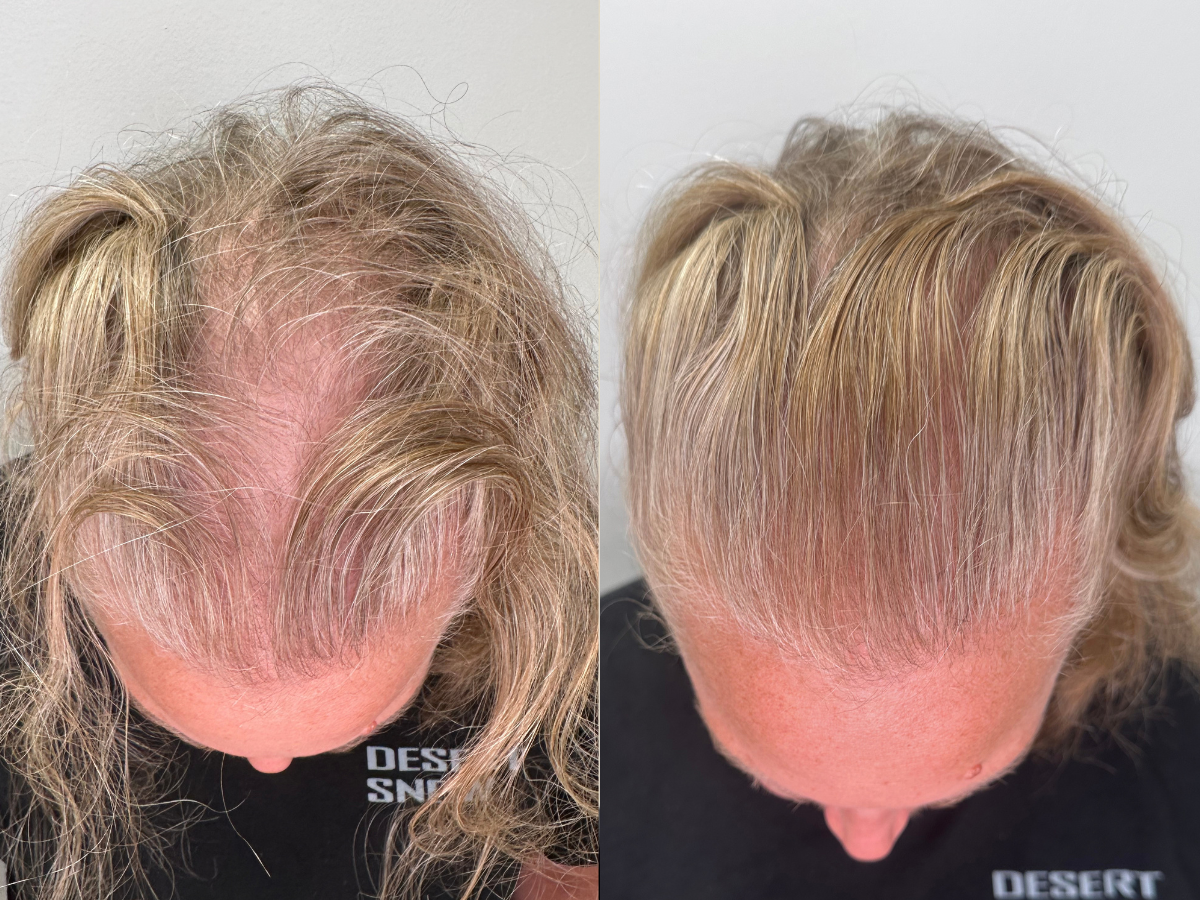
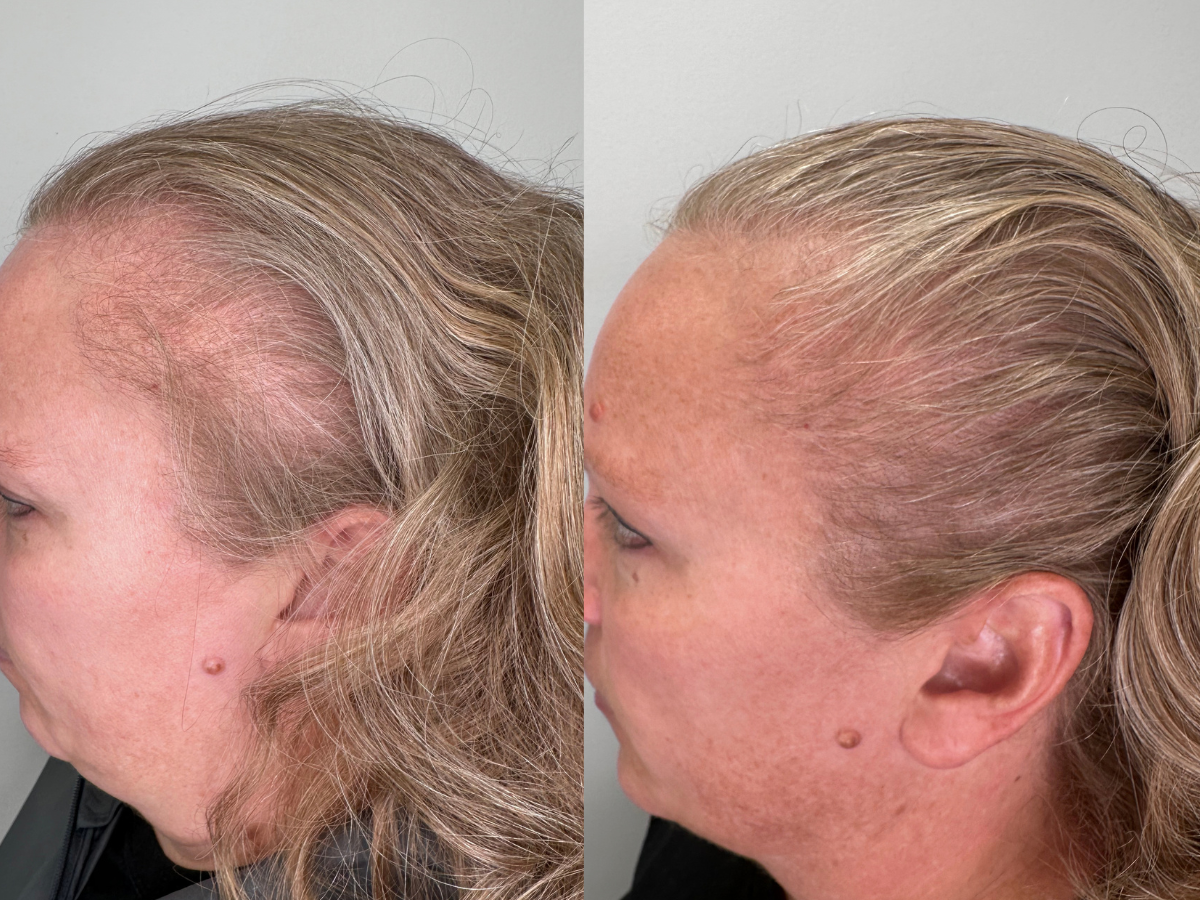
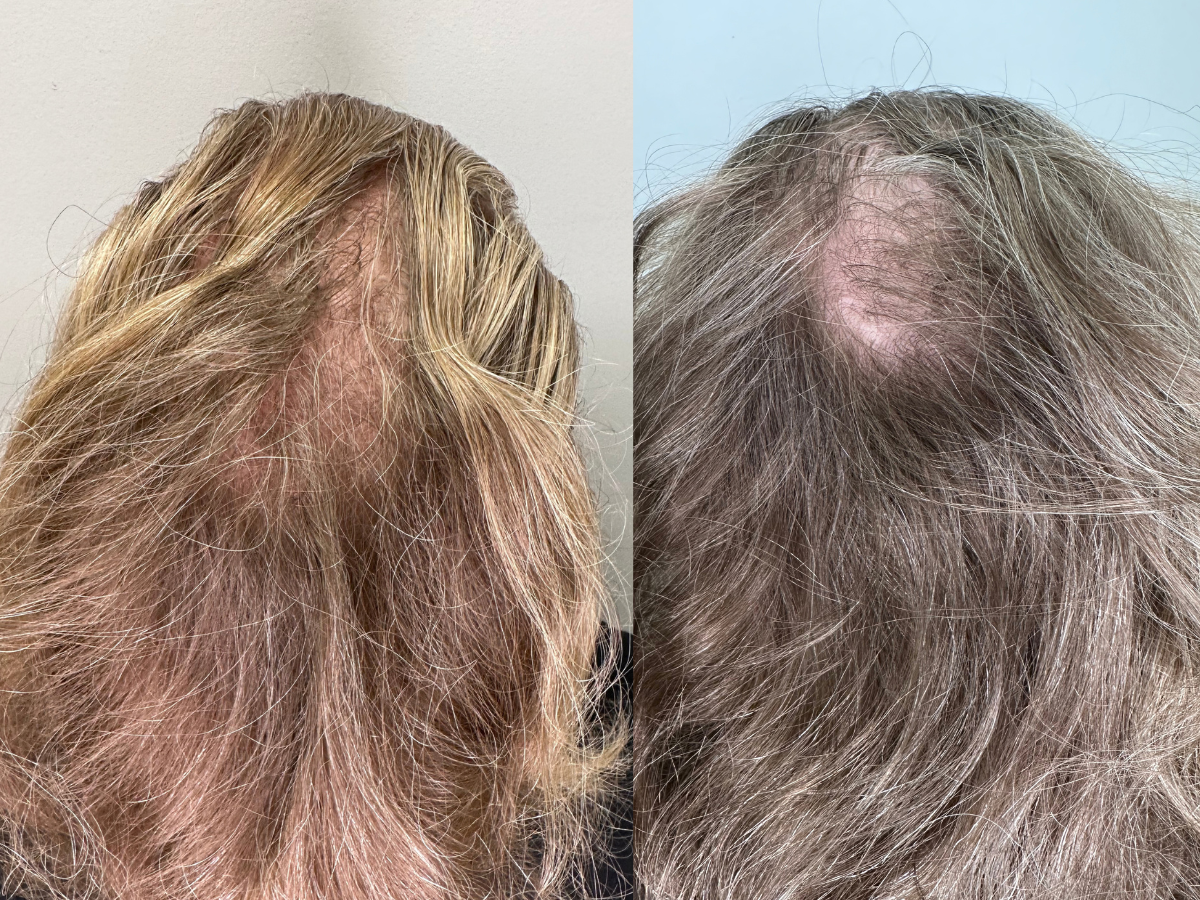
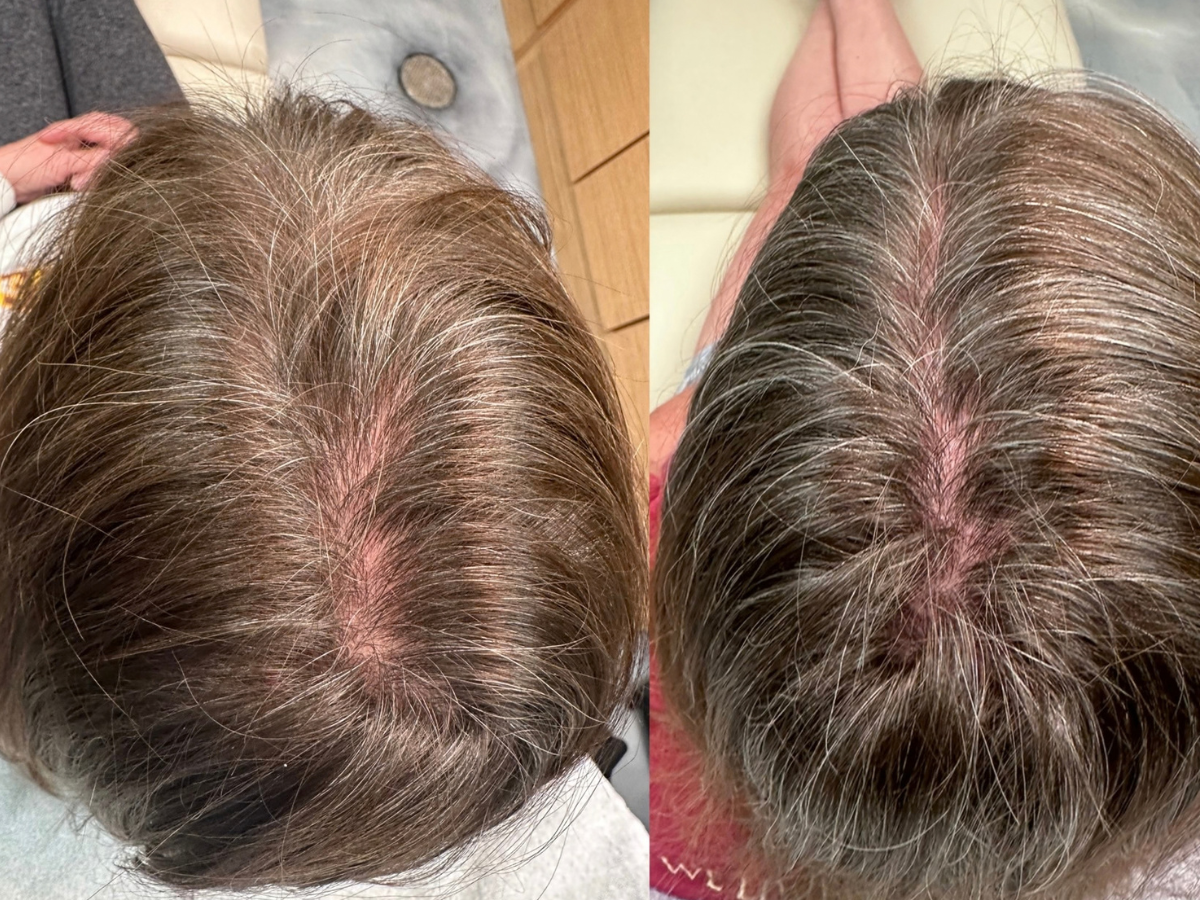
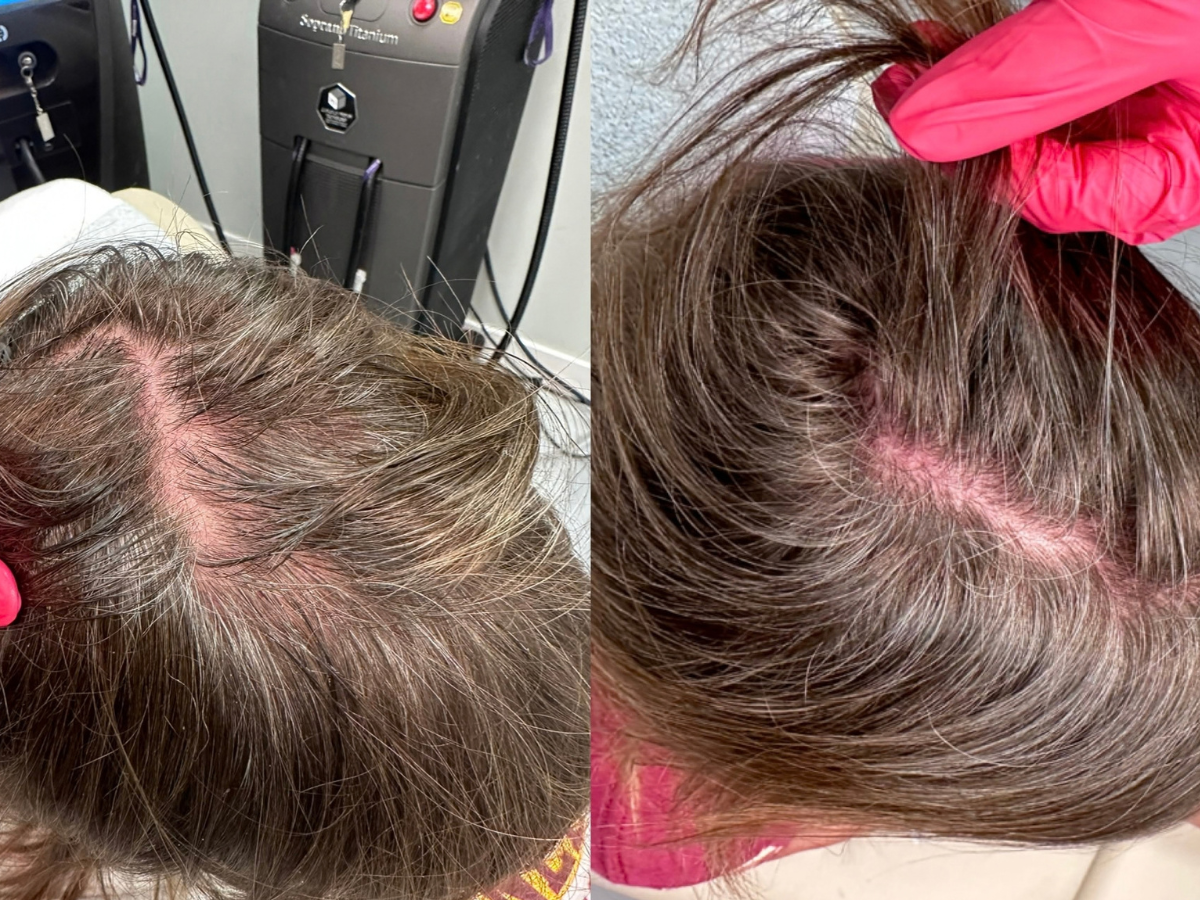
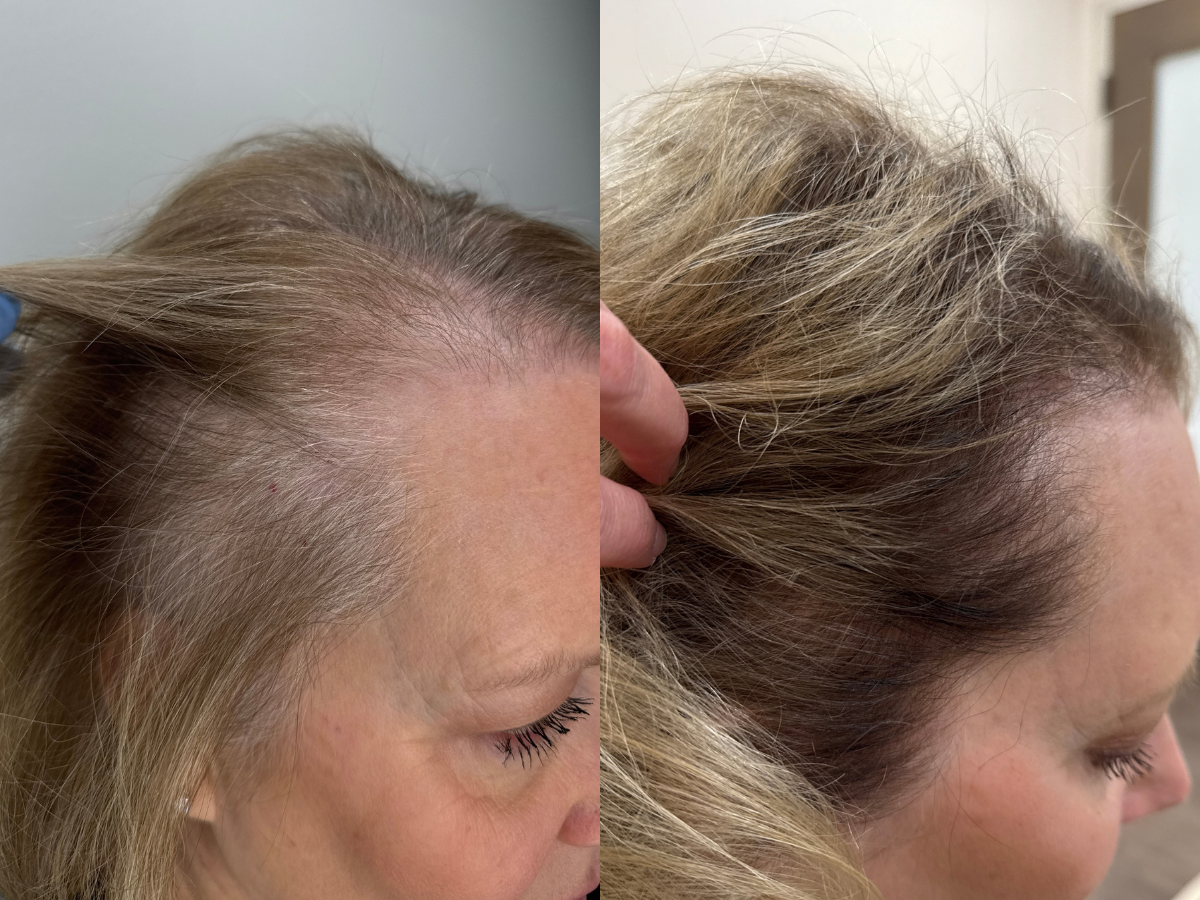
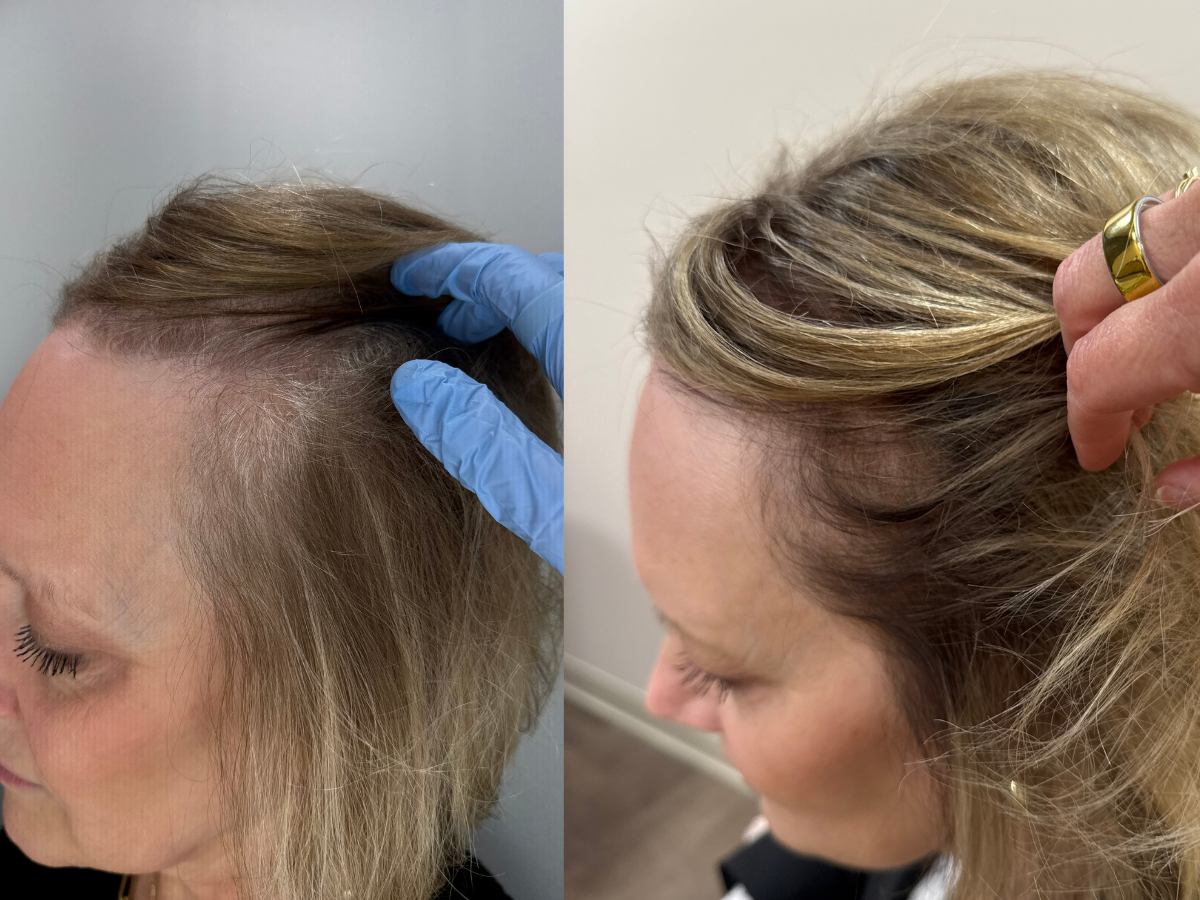
We take baseline photos at your first visit and compare them at 3 and 6 months, so you can see your progress instead of guessing.
If you’re not responding the way we expect, we adjust the plan.
Hair grows slowly and results vary from person to person, which is exactly why we track them.
Real Patients, Real Results
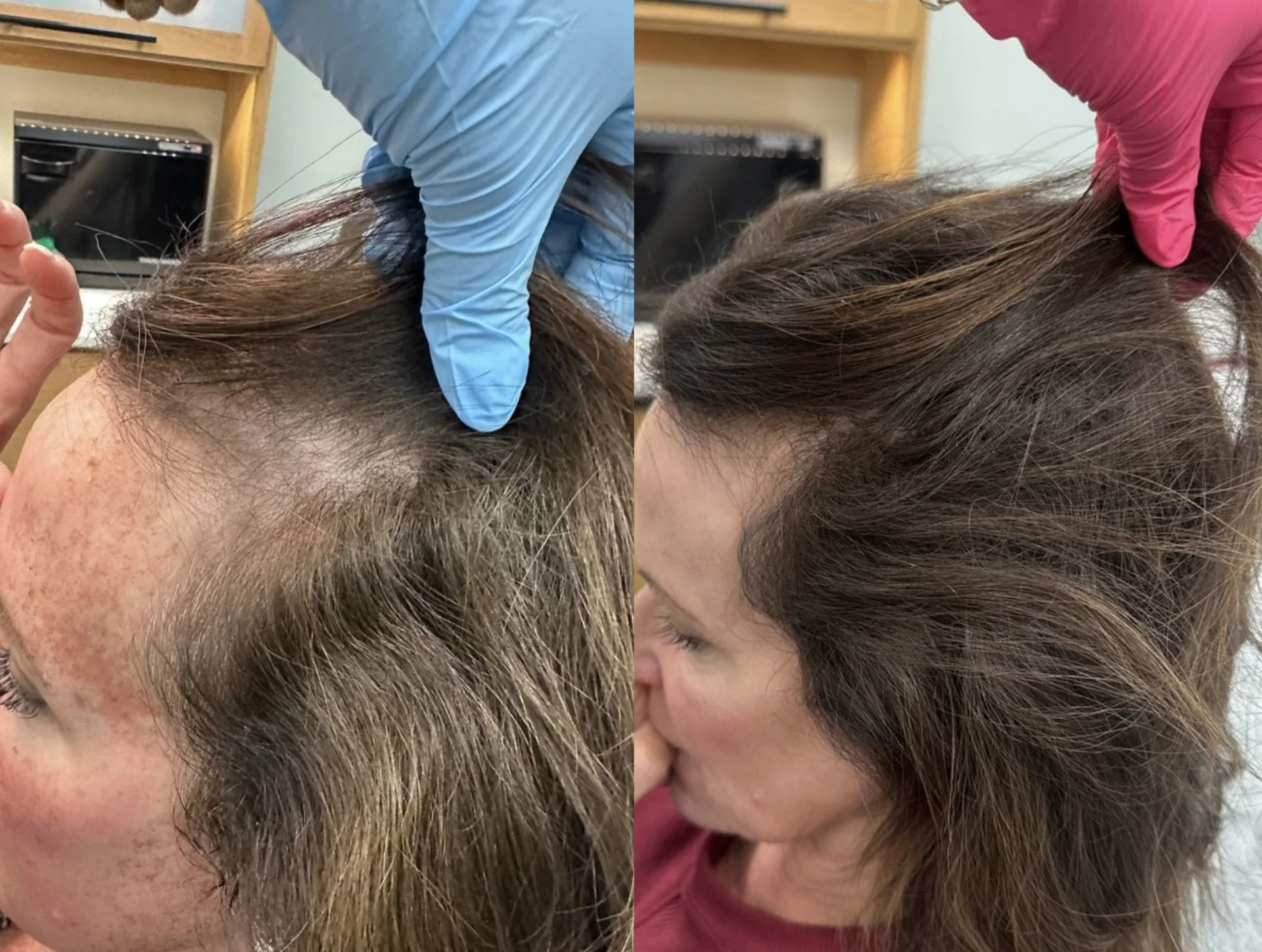
Skin Clinic clients. Individual results vary.
“My experience at the Skin Clinic Med Spa has been great! Everyone is very friendly, knowledgeable and helpful.”
– F.E.
“Heidi and her team are amazing! They provide superior patient care, and truly care about you as an individual.”
– Tanya
HAIR RESTORATION BEFORE & AFTER RESULTS
-
Female hair loss can have many causes, including genetics, hormonal changes, aging, stress, nutritional factors, medications, medical conditions, and changes in the normal hair-growth cycle.
Women may experience increased shedding, a widening part, finer hair, or decreased density throughout the scalp. Determining what may be contributing to the change is an important first step before choosing a treatment.
-
Genetics are a common contributor to male hair loss, particularly when thinning occurs around the temples, hairline, or crown. Hormones, aging, nutrition, stress, medications, and other health factors may also influence hair growth.
-
It depends on the cause of the hair loss and the health of the follicles.
Some forms of shedding are temporary, while other types of hair loss are progressive. Hair restoration treatments generally rely on the presence of follicles capable of responding to treatment, which is one reason earlier evaluation can be beneficial.
-
Start with a medical assessment of the pattern, timing, scalp and your health history. Bring a medication and supplement list, previous treatment details and helpful photographs. Depending on the findings, further tests or dermatology evaluation may be needed before choosing a service.
-
Ask about our Signature Hair Restoration Program and current financing options. Before enrolling, review the recommended services, session count, home care, follow-up, maintenance and total investment. Financing eligibility and terms are determined by the financing provider.
-
Preparation and aftercare differ between TED, scalp RF and other services. Ask whether to wash your hair and which products to avoid before your specific appointment. Review medications, scalp conditions and recent procedures with your provider. Follow the instructions for your treatment rather than assuming all procedures have no recovery.
-
Hormonal changes can affect the hair-growth cycle. Changes involving thyroid hormones, estrogen, testosterone, and other hormonal factors may contribute to hair changes in some people.
When your symptoms or history suggest hormones could be playing a role, additional evaluation may be appropriate.
-
TED stands for TransEpidermal Delivery. It is a non-invasive, needle-free system that uses ultrasound-based technology to support the delivery of topical hair and scalp compounds.
It may be incorporated into a personalized treatment plan for clients experiencing thinning or decreased hair density.
-
TED is designed to provide a comfortable, needle-free treatment experience. There are no injections involved, and little to no downtime is typically required.
-
Hair grows slowly, so hair restoration is not an overnight process.
Depending on the cause of your hair loss and the treatments used, changes may develop gradually over several months. We'll discuss a realistic timeline based on your specific treatment plan.
-
There isn't one treatment schedule that applies to everyone.
The number and frequency of treatments depend on your type of hair loss, the treatments included in your plan, your starting point, and how you respond.
-
Suitability depends on the cause and pattern of hair loss, scalp condition, health history and your expectations. A consultation helps determine whether a clinic service or another medical approach fits your needs. Sudden patches, scalp pain or rapidly progressing loss should receive medical evaluation.
-
Hair restoration costs vary because treatment plans are personalized.
Your investment will depend on the treatments recommended, the number of sessions needed, and whether you're participating in a comprehensive hair restoration program.
During your consultation at The Skin Clinic, we'll review your recommendations and pricing before you decide how you'd like to proceed.
Hair Restoration FAQs
Hair Restoration in Mankato, MN
Your hair has a story. Let’s start with a conversation about what’s changed, what you’ve tried and what you want to feel again when you look in the mirror.
The Skin Clinic welcomes women and men from Mankato, North Mankato, St. Peter, New Ulm and across Southern Minnesota. Visit us at 1105 Range Street, North Mankato, MN 56003, or call (507) 550-2232.
Questions About Hair Restoration?
You do not need to choose a treatment before your visit. Book a consultation or call (507) 550-2232 to discuss your next step.
Learn more about our care team and what to expect at your visit.