
What Is TMS Therapy? How It Works & What to Expect | Mankato, MN
Mental health treatment has traditionally centered around approaches such as medication and psychotherapy. While these treatments can be incredibly valuable, they aren't the only tools available.
One option that has gained increasing attention is Transcranial Magnetic Stimulation, commonly known as TMS therapy.
TMS is a non-invasive form of brain stimulation that uses magnetic fields to influence activity in targeted areas of the brain. It does not require surgery, injections, or anesthesia, and treatment is performed while you're awake.
At The Skin Clinic in North Mankato, Minnesota, we offer Exomind, a TMS technology designed to deliver targeted magnetic stimulation as part of an individualized approach to mental wellness.
If you've heard about TMS but aren't quite sure what it is, how it works, or what treatment actually feels like, here's what you should know.
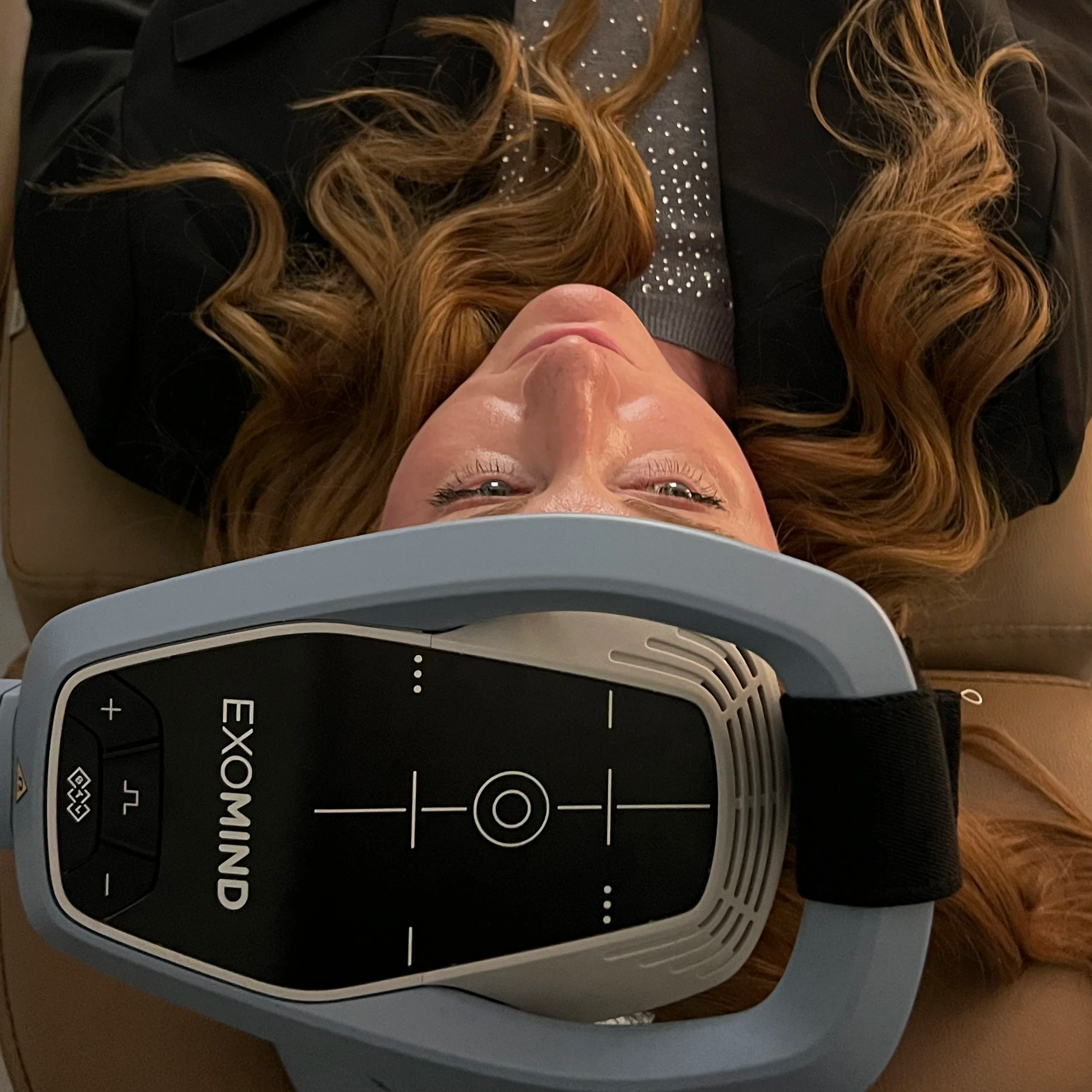
What Is TMS Therapy?
Transcranial Magnetic Stimulation is a non-invasive treatment that uses controlled magnetic pulses to stimulate targeted areas of the brain.
The concept may sound complicated, but the treatment itself is relatively straightforward.
During TMS, a device positioned near the head creates magnetic pulses. Those pulses pass through the scalp and stimulate underlying brain tissue.
Different areas of the brain are involved in functions such as mood, motivation, decision-making, and emotional regulation. TMS protocols are designed to target specific areas depending on the condition being treated and the treatment goals.
Unlike medication, TMS does not require a drug to circulate throughout the body.
And unlike surgical forms of brain stimulation, TMS does not require incisions or implanted devices.
How Does TMS Work?
Your brain communicates through complex networks of neurons using electrical and chemical signals.
When TMS is performed, magnetic pulses create small electrical currents within targeted brain tissue. These pulses can influence activity within specific neural networks.
One of the areas commonly targeted in TMS treatment for depression is the prefrontal cortex, an area involved in mood regulation and other cognitive functions.
Treatment protocols can vary based on the device, condition being treated, and individual patient.
At The Skin Clinic, Exomind uses TMS technology to deliver magnetic stimulation through a specialized treatment system.
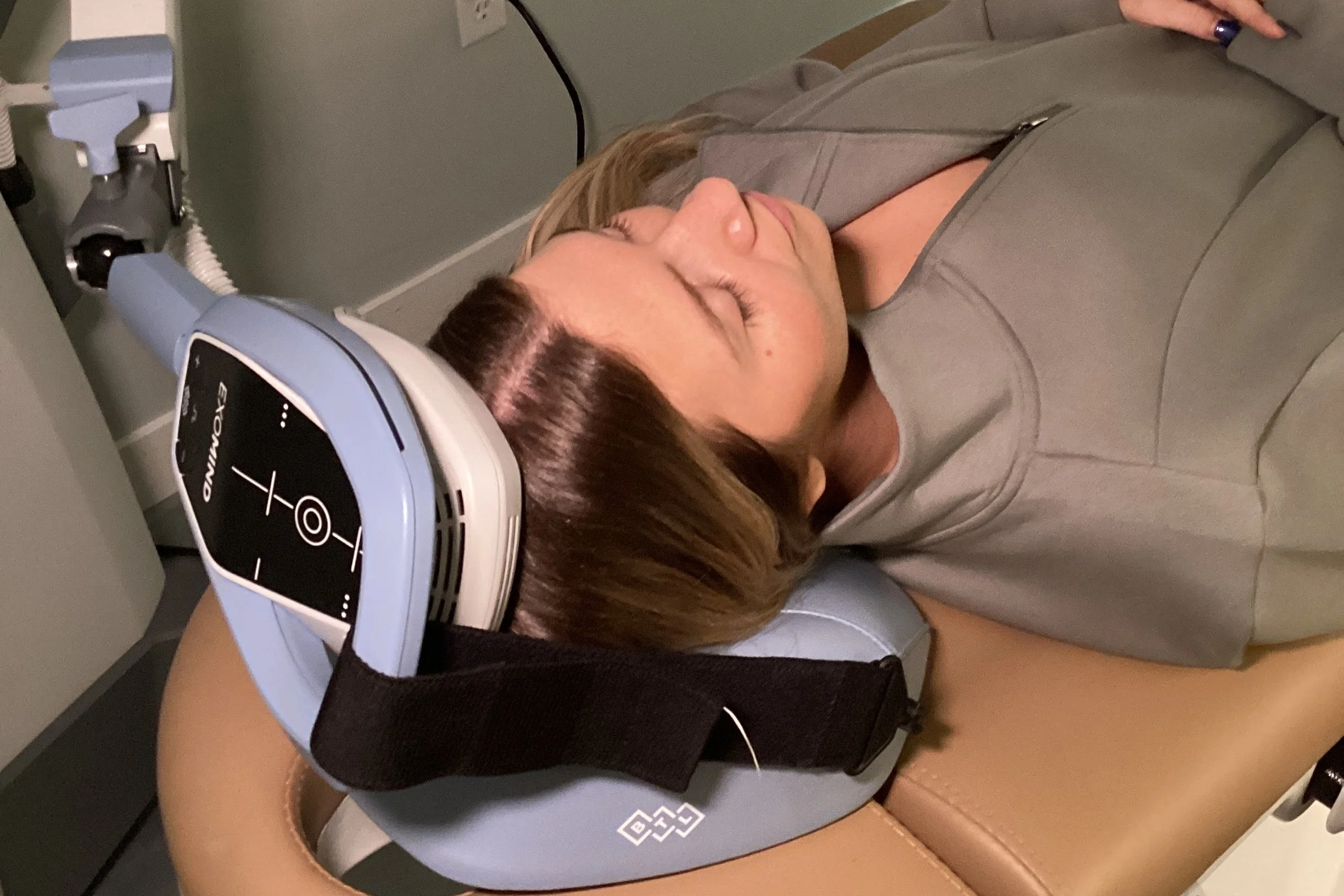
What Is Exomind?
Exomind is a non-invasive TMS technology that delivers targeted magnetic stimulation to the brain.
During treatment, you remain awake and seated comfortably while the device delivers magnetic pulses according to your treatment protocol.
There are:
No needles
No incisions
No anesthesia
No traditional recovery period
A typical treatment takes approximately 30 minutes, making it possible for many patients to return to their usual daily activities afterward.
Exomind is not a one-time treatment. TMS is typically performed as a series, with the recommended number and frequency of treatments determined by your individual needs and treatment protocol.
What Does TMS Feel Like?
This is one of the most common questions we hear from people considering Exomind.
During treatment, you may notice tapping, pulsing, tingling, or muscle sensations around the treatment area as the magnetic pulses are delivered.
You remain awake throughout the entire session and can communicate with your provider.
Individual experiences vary, and some people may experience temporary discomfort during treatment.
Before beginning your treatment series, your provider will explain what you can expect and monitor your comfort during each session.
Is TMS the Same as Electroconvulsive Therapy?
No. TMS and electroconvulsive therapy, or ECT, are different treatments.
TMS uses magnetic fields to stimulate targeted areas of the brain. It does not intentionally produce a seizure and typically does not require anesthesia.
ECT uses an electrical current to intentionally produce a controlled seizure while a patient is under anesthesia.
Both have roles within mental health treatment, but they use different mechanisms and have different procedures, indications, risks, and recovery considerations.
Is TMS the Same as Taking an Antidepressant?
No.
Antidepressant medications and TMS influence the brain in different ways.
Medication is taken orally or through another route and circulates throughout the body. Because of this systemic exposure, medications can potentially cause side effects elsewhere in the body.
TMS instead delivers magnetic stimulation to targeted areas of the brain.
That doesn't mean TMS is automatically better than medication—or that someone receiving TMS should stop taking medication.
For some patients, TMS may be used alongside medication and psychotherapy as part of a broader treatment plan.
Never stop or change a prescribed mental health medication without talking with the healthcare provider managing that medication.
Can TMS Help With Depression?
TMS has established clinical applications for certain depressive disorders and has been studied extensively as a treatment option for depression.
It may be considered for some individuals who have not experienced an adequate response to other approaches or who are exploring additional treatment options.
However, not everyone experiencing low mood or other symptoms has the same diagnosis, and TMS isn't appropriate for every person.
A proper evaluation is important before beginning treatment.
At The Skin Clinic, we review your symptoms, health history, medications, existing mental health treatment, and treatment goals before determining whether Exomind may be appropriate for you.
What About Anxiety, Focus, and Mental Clarity?
Mental wellness is complicated.
Difficulty concentrating, low motivation, brain fog, poor sleep, anxiety, fatigue, and changes in mood can have many possible causes.
Sleep, stress, mental health conditions, medications, nutrition, hormones, metabolic health, and other medical conditions can all influence how you feel.
That's one reason we believe it's important not to assume every symptom has the same solution.
During your consultation, we'll talk about what you're experiencing and look at the broader picture before recommending treatment.
What Are the Potential Side Effects of TMS?
TMS is generally considered non-invasive and is often well tolerated, but that doesn't mean it is completely free of potential side effects.
Common side effects can include:
Temporary headache
Scalp discomfort
Tingling
Muscle twitching or sensations during treatment
There are also uncommon but potentially serious risks associated with TMS.
Your provider should review the potential benefits, risks, contraindications, and alternatives with you before you begin treatment.
Who Should Not Have TMS?
TMS may not be appropriate for everyone.
Certain implanted metallic or electronic devices—particularly those located in or near the head—may affect whether TMS can be performed safely.
Your medical history, medications, previous diagnoses, and other factors may also influence whether you're a candidate.
This is why an appropriate health and safety screening is an important part of the consultation process.
How Many TMS Treatments Do You Need?
TMS is generally performed as a series of treatments, rather than a single appointment.
Your specific treatment schedule will depend on the protocol being used, your individual needs, and how you respond to treatment.
During your Exomind consultation at The Skin Clinic, we'll explain the recommended number and frequency of treatments before you begin.
How Quickly Does TMS Work?
There isn't one timeline that applies to everyone.
Some individuals may begin noticing changes during their treatment series, while others may experience changes more gradually.
Mental wellness treatments also shouldn't be evaluated based on one good or bad day.
That's why monitoring your progress throughout your treatment series is important. Your provider can evaluate how you're responding and discuss appropriate next steps.
Do You Have to Stop Your Current Mental Health Treatment?
Not necessarily.
TMS may be incorporated into an existing mental health treatment plan.
Depending on your individual situation, that could include psychotherapy, medication, primary care, psychiatric care, lifestyle changes, or other treatments.
If you already have a mental health provider, we encourage you to continue working with that provider and to discuss significant treatment changes with the clinicians involved in your care.
TMS shouldn't be viewed as an automatic replacement for every other form of mental health care.
Why We Look at More Than Mental Wellness Alone
At The Skin Clinic, one of our core philosophies is looking at the whole person.
Mental and physical health aren't completely separate.
Sleep can affect mood.
Hormonal changes can affect how you feel. Learn more about Hormone Optimization at the Skin Clinic
Chronic stress can affect energy and motivation.
Nutrition and metabolic health can influence overall well-being.
And medications or underlying health conditions can sometimes contribute to symptoms that initially seem unrelated.
That doesn't mean every mental health symptom is caused by hormones, nutrition, or lifestyle—and it doesn't mean every symptom can be solved with Exomind.
It means we believe your symptoms deserve to be heard and evaluated within the context of your overall health.
What Should You Ask Before Starting TMS?
If you're considering TMS therapy, don't be afraid to ask questions.
Some helpful questions include:
Why are you recommending TMS for me?
What condition or symptoms are we addressing?
What treatment protocol will be used?
How many treatments are recommended?
What should treatment feel like?
What are the potential side effects?
Are there reasons TMS may not be safe for me?
Can I continue my current medications?
How will we evaluate whether treatment is helping?
What happens after I complete my treatment series?
You should understand what you're receiving and why before beginning treatment.Start Your Summer Plan Today
Summer will be here before you know it. The treatments that deliver the best results need time to work — and the earlier you start, the more confident you’ll feel when the weather finally cooperates.
And remember — at The Skin Clinic, summer prep isn’t just about what you see in the mirror. If you’re also dealing with low energy, stubborn weight, hormonal changes, or the feeling that your body isn’t cooperating from the inside, our whole-person approach means we can address those concerns alongside your aesthetic treatments. Looking great and feeling great for summer — that’s the whole-person difference.
Where Can I Get TMS Therapy in Mankato, MN?
The Skin Clinic offers Exomind TMS therapy in North Mankato, Minnesota, serving patients throughout Mankato, North Mankato, St. Peter, New Ulm, Waseca, and surrounding Southern Minnesota communities.
Our approach starts with a conversation.
We'll discuss what you're experiencing, review your health history and current treatment, answer your questions about Exomind, and determine whether TMS may be an appropriate option for you.
Considering Exomind? Start With a Consultation.
You don't need to decide whether TMS is right for you before you walk through our doors.
That's the purpose of your consultation.
We'll help you understand how Exomind works, what treatment involves, potential benefits and risks, and whether it makes sense based on your individual circumstances.
If you've been searching for TMS therapy in Mankato, MN or want to learn more about non-invasive options for mental wellness, we're here to help you understand your next step.
