

If you're tired of shaving, waxing, or plucking every few days, you've probably already looked into laser hair removal. It's one of the most popular cosmetic treatments in the country, and for good reason — it delivers long-term hair reduction that razors and wax simply can't match. But one question comes up in almost every consultation we do at The Skin Clinic: "How many sessions will I actually need?"
The honest answer is that it depends on several factors specific to you. But we can break down exactly what determines your treatment timeline, so you walk into your first appointment with realistic expectations instead of guesswork.
How Laser Hair Removal Works
Laser hair removal uses a concentrated beam of light that targets the melanin (pigment) inside your hair follicles. The laser heats the follicle enough to damage its ability to produce new hair, without harming the surrounding skin. Once a follicle is disabled, it stops producing hair altogether or produces hair that's finer, lighter, and much slower to regrow.
This process sounds simple, but your body doesn't cooperate all at once. Hair doesn't all grow on the same schedule — and that single fact explains almost everything about why you need more than one appointment.
Why You Need Multiple Sessions: The Hair Growth Cycle
Every hair on your body cycles through three distinct growth phases:
Anagen (growth phase): The follicle is actively producing hair, and the hair is anchored deep in the skin. This is the only phase in which laser treatment works, because the follicle contains enough melanin for the laser to target effectively.
Catagen (transition phase): The follicle shrinks and detaches from its blood supply, preparing to stop growing hair.
Telogen (resting phase): The hair sits dormant before it eventually sheds and the cycle restarts.
At any given moment, only about 85–90% of your hair follicles sit in the anagen phase on a treated area, while the rest sit in catagen or telogen and stay invisible to the laser. Because you can't predict which follicles will enter their growth phase next, you need repeated sessions spaced several weeks apart to catch each wave of hair as it becomes treatable. This is the single biggest reason laser hair removal takes multiple visits rather than one.
So, How Many Sessions Do Most People Need?
Most clients achieve their best results after 6 to 8 sessions, spaced roughly 4 to 6 weeks apart. That said, this range represents an average, not a guarantee. Some people see dramatic results in fewer sessions, while others — particularly those with hormonal conditions like PCOS, or areas with naturally dense hair — may need 8 to 10 or more sessions to reach the same level of clearance.
After your initial series, most people also benefit from occasional touch-up or maintenance sessions once or twice a year, since a small percentage of follicles can reactivate over time, especially in hormone-sensitive areas like the chin or bikini line.
Factors That Affect Your Total Session Count
1. Hair Color and Thickness
Laser hair removal targets melanin, so darker, coarser hair absorbs laser energy efficiently and responds faster. Fine, light blonde, gray, or red hair contains far less pigment, so it responds more slowly and often needs additional sessions — or may not respond to traditional lasers at all.
2. Skin Tone
Your provider selects the laser wavelength based on your skin tone using the Fitzpatrick skin type scale. Lighter skin with dark hair typically produces the fastest, most predictable results because the laser can distinguish easily between skin and hair pigment. Deeper skin tones require a longer wavelength laser (such as Nd:YAG) to protect the skin while still targeting the follicle effectively, which can occasionally mean a slightly longer treatment plan.
3. Treatment Area
Hair grows at different speeds depending on where it's located, which changes how quickly you move through your treatment plan:
Fast-growing areas (upper lip, chin, underarms) cycle through anagen phases quickly, so sessions can happen every 4 to 6 weeks.
Slower-growing areas (back, legs) take longer to cycle, so providers space sessions 6 to 8 weeks apart, occasionally longer.
4. Hormones
Hormonal fluctuations from conditions like PCOS, pregnancy, menopause, or certain medications can stimulate new hair growth even after a follicle has been previously treated. If hormones are a factor for you, expect to need more sessions and possibly more frequent maintenance visits down the road.
5. Density of Hair Growth
An area with a high concentration of follicles per square inch naturally requires more total treatment passes to clear every follicle, compared to a sparser area with less overall hair.
6. Consistency and Session Spacing
Skipping appointments or spacing them too far apart lets follicles you haven't yet treated slip back into a resting phase, which can stretch out your total timeline. Sticking to your recommended schedule keeps your treatment on track and helps you reach smooth, hair-free skin faster.
What Happens During Each Session
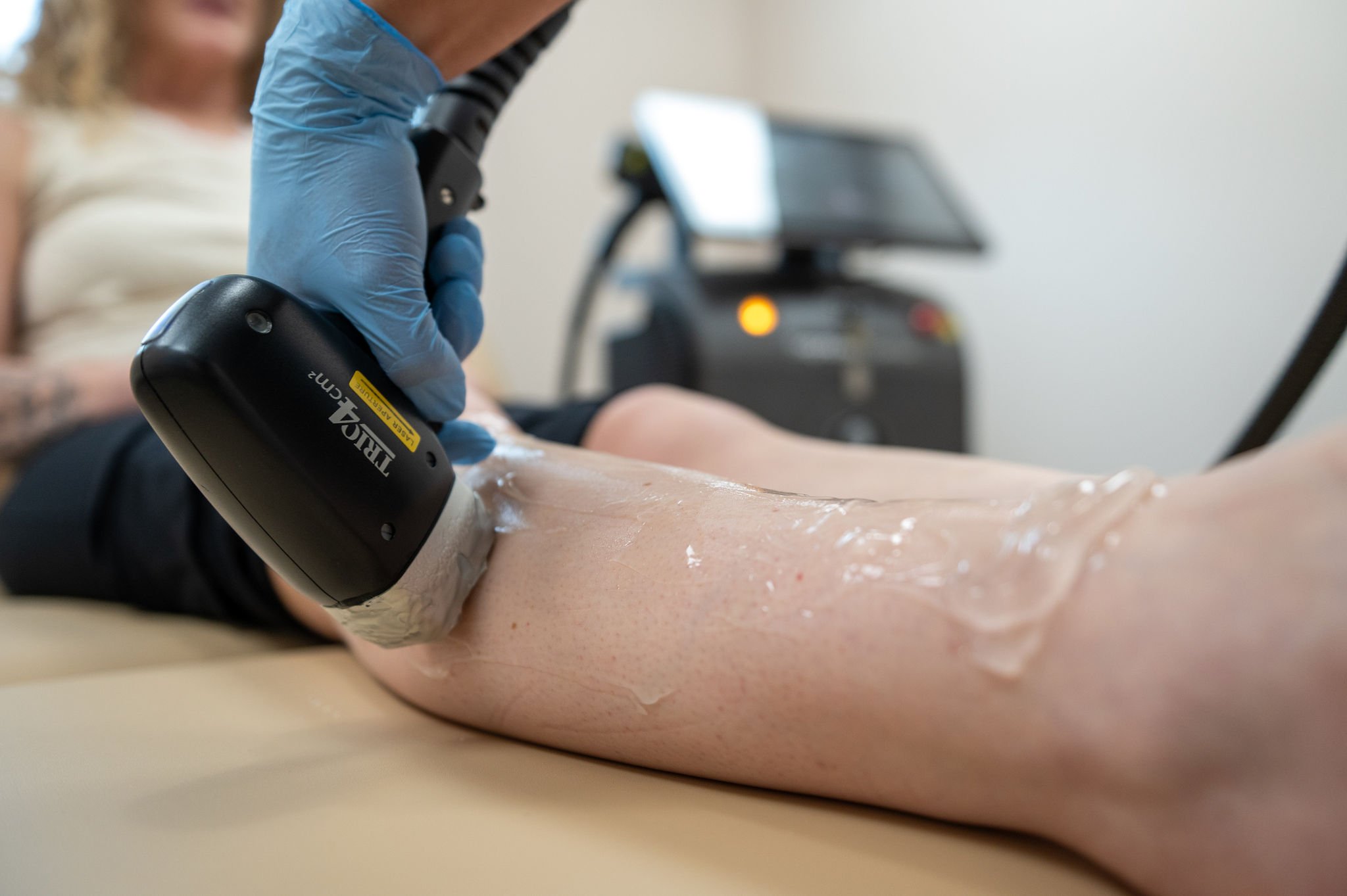
Each laser hair removal session follows a similar structure. Your provider cleans the treatment area, applies a cooling gel if needed, and passes the laser handpiece systematically across your skin. Most sessions take anywhere from 15 minutes (small areas like the lip) to 60 minutes (larger areas like full legs or the back). You may feel a warm snapping sensation, but most clients tolerate it well, especially with modern cooling technology built into today's lasers.
Afterward, treated hairs don't fall out immediately. Instead, they shed gradually over the next 1 to 3 weeks, which can look like regrowth even though it's actually your body pushing out the treated hair.
How to Get the Most Out of Every Session
You can help your treatment plan stay on track — and potentially reduce your total number of sessions — by following a few simple guidelines:
Shave, don't wax or pluck, between sessions. Waxing and plucking remove the hair from the root, which eliminates the target the laser needs to work.
Avoid sun exposure on the treatment area. Tanned skin increases the risk of side effects and can make treatment less effective.
Skip self-tanners before your appointment. They interfere with the laser's ability to distinguish your natural skin tone from hair pigment.
Show up for every scheduled session. Consistency keeps you moving through the hair growth cycle efficiently.
Communicate changes in medication or hormones. New prescriptions, pregnancy, or hormonal shifts can all affect how your hair responds.
Why a Personalized Consultation Matters
Because so many variables — hair color, skin tone, hormone levels, treatment area, and hair density — factor into your total session count, no generic number applies to everyone. A personalized consultation lets your provider examine your specific hair and skin characteristics, choose the right laser settings for you, and build a realistic treatment plan with an accurate session estimate from the start.
At The Skin Clinic, we build every laser hair removal plan around your individual goals rather than a one-size-fits-all package. Our providers evaluate your hair type, skin tone, and treatment area during your first visit, then map out a session schedule designed to get you to smooth, low-maintenance skin as efficiently as possible.
The Bottom Line
Most people need 6 to 8 laser hair removal sessions to see significant, lasting hair reduction, though your personal timeline depends on your hair color, skin tone, hormone levels, and the treatment area you choose. Multiple sessions aren't a sign that laser hair removal "isn't working" — they're simply how the treatment accounts for your natural hair growth cycle. Stick to your provider's recommended schedule, follow the pre- and post-care guidelines, and you'll steadily work your way toward the smooth, confident results you're after.
Ready to find out how many sessions your skin and hair type will need? Schedule a consultation with The Skin Clinic today, and let's build a laser hair removal plan tailored to you.
